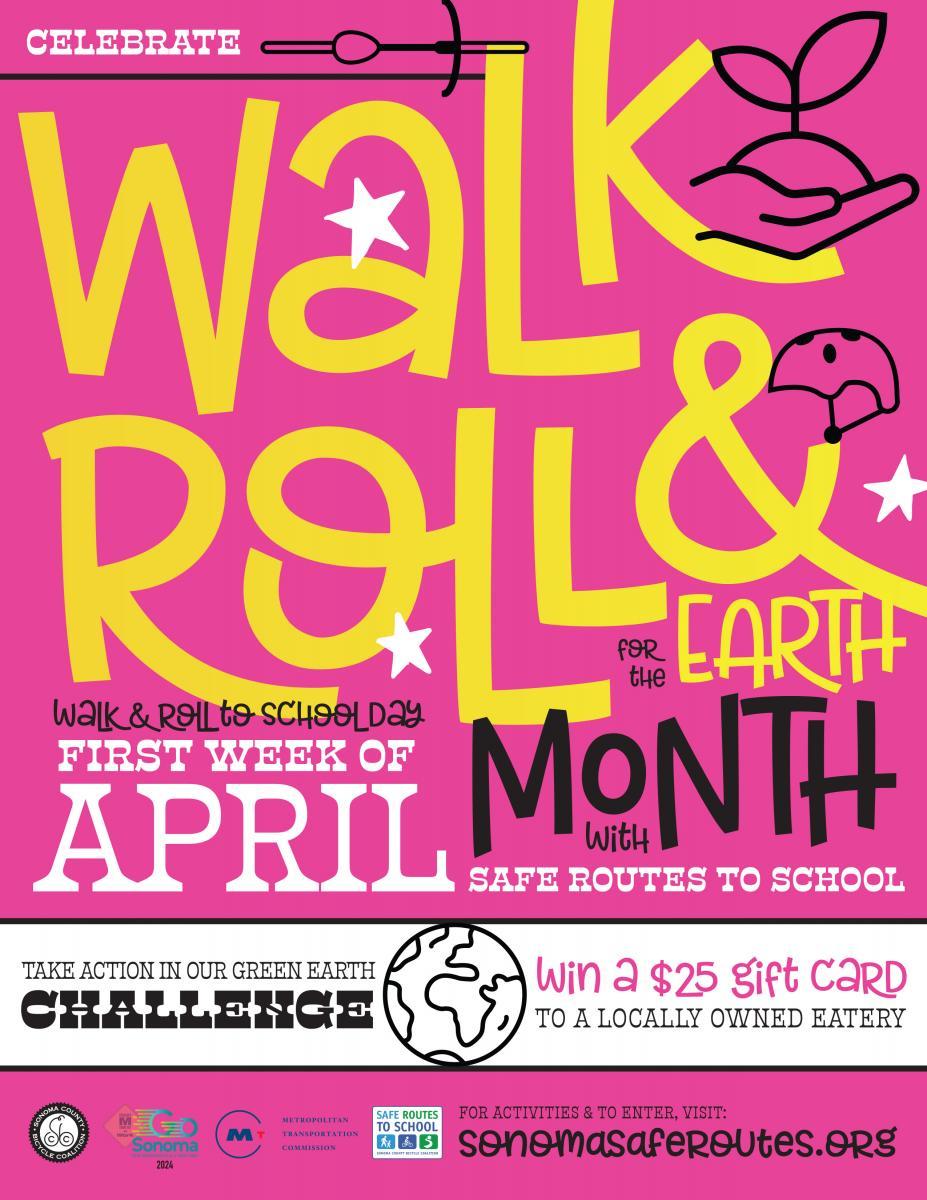
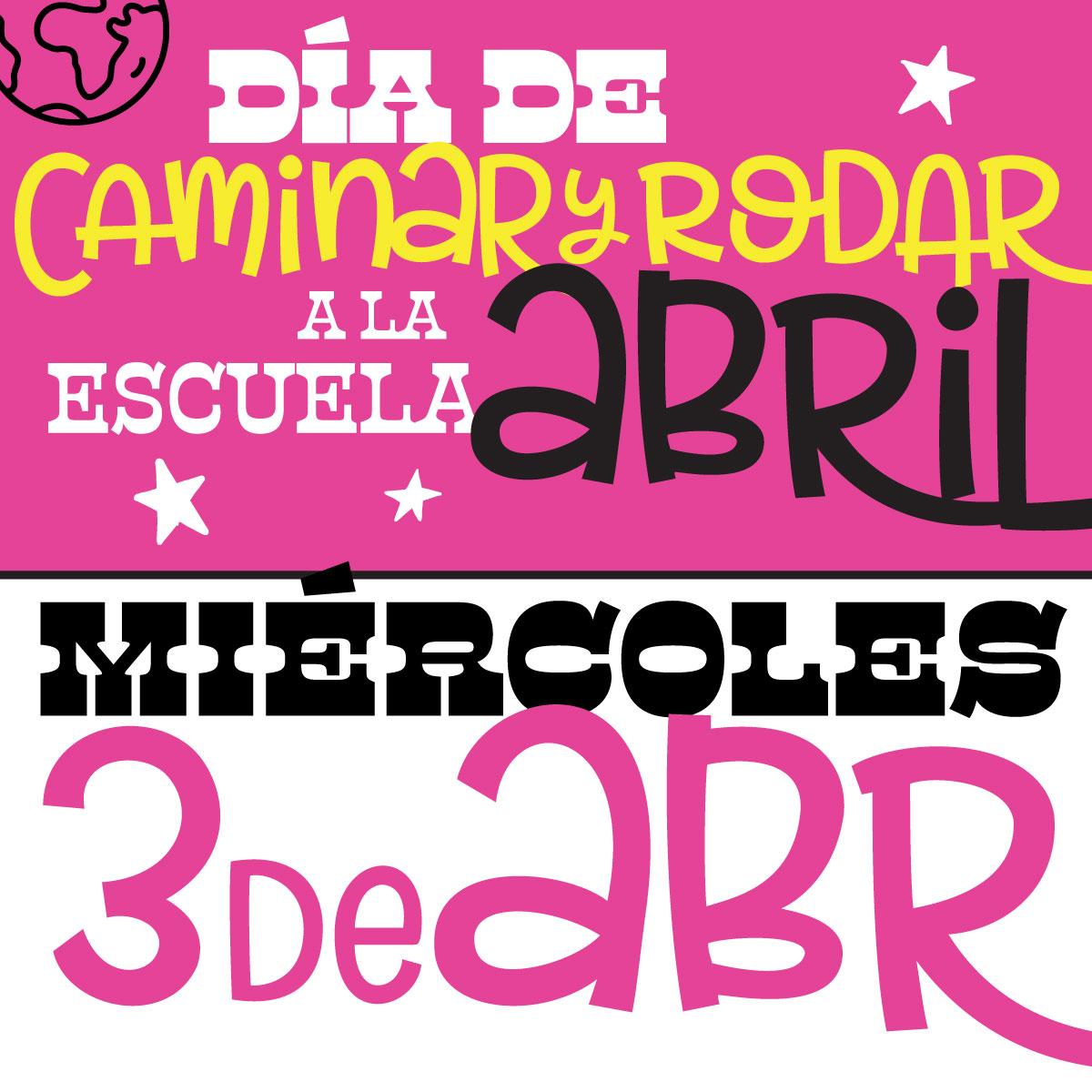
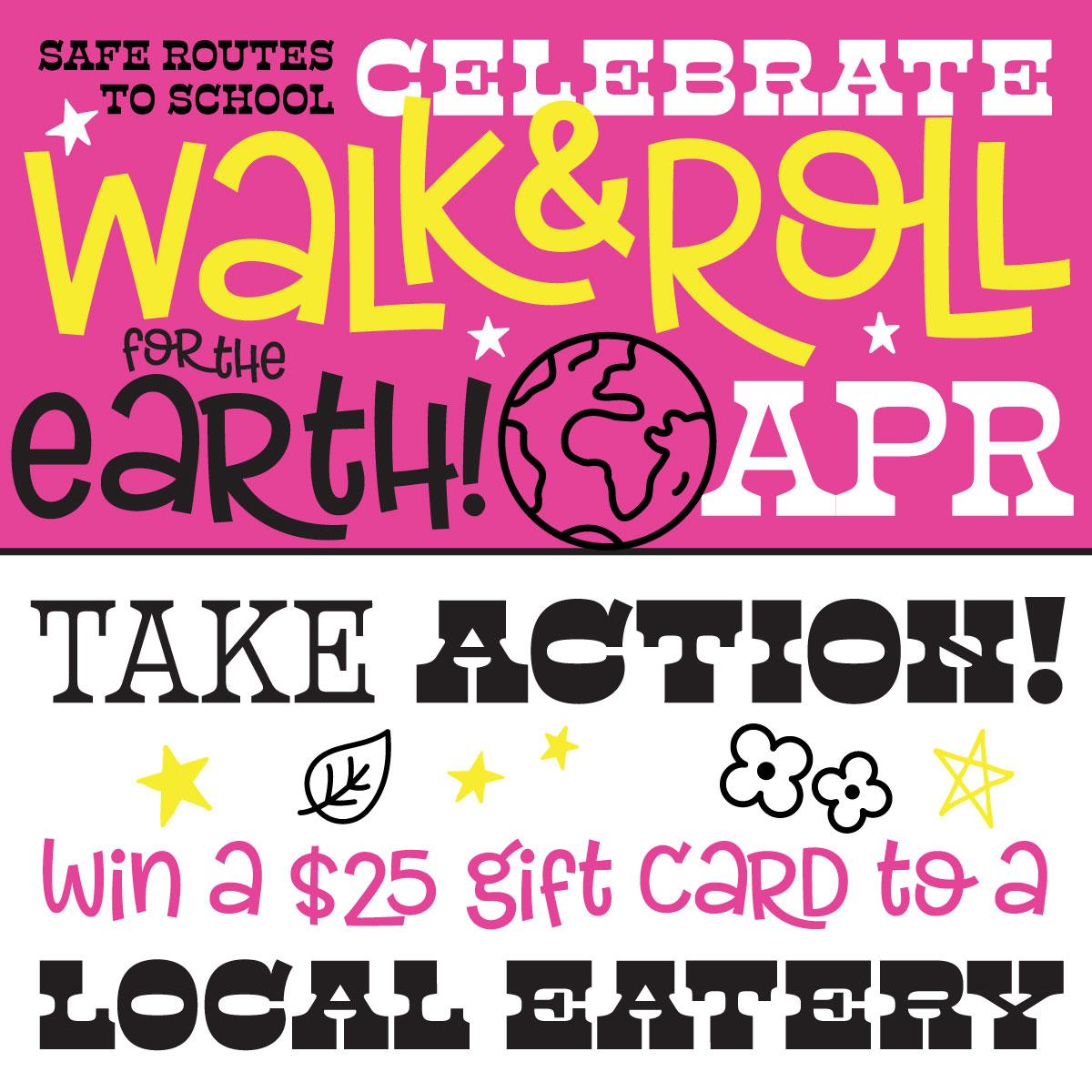
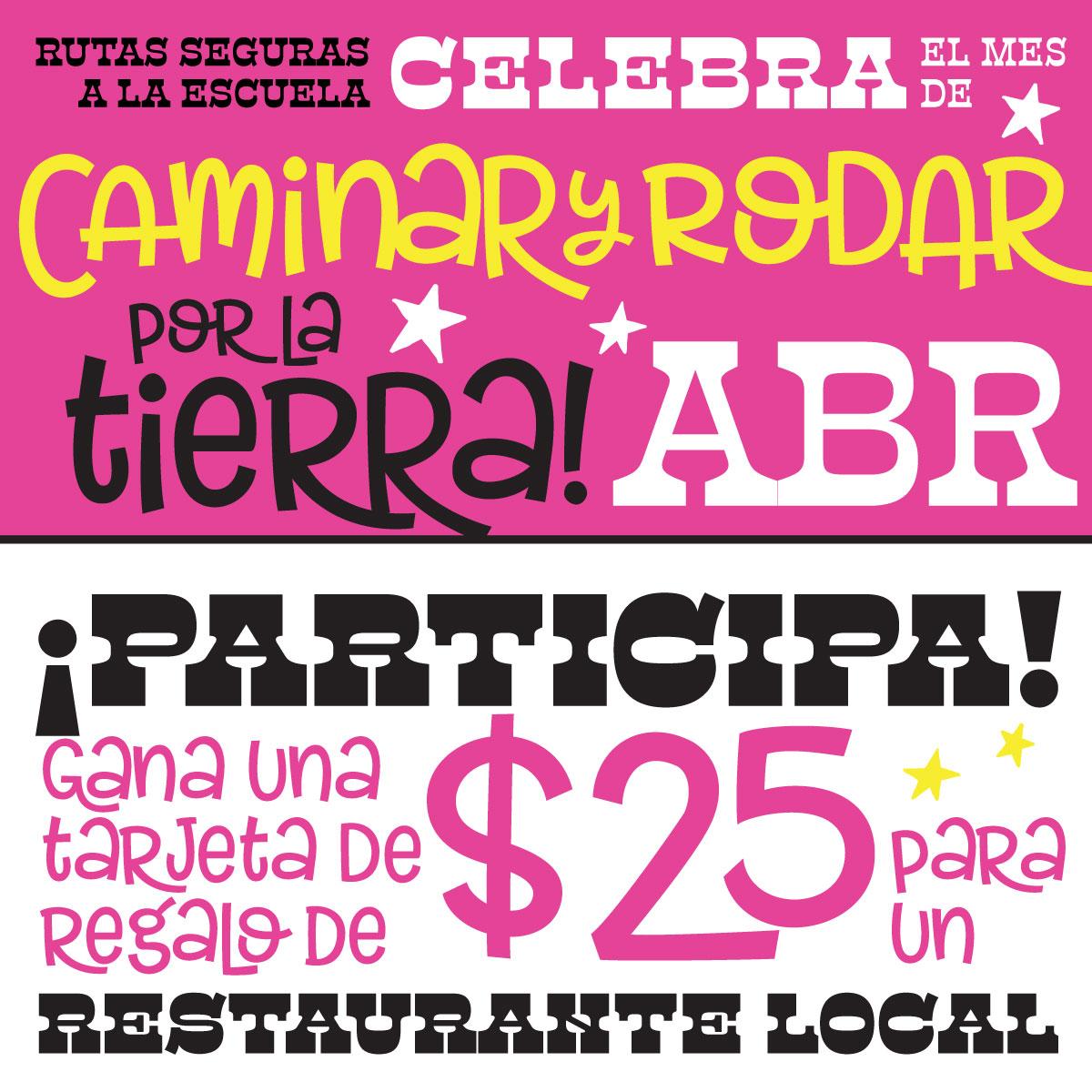
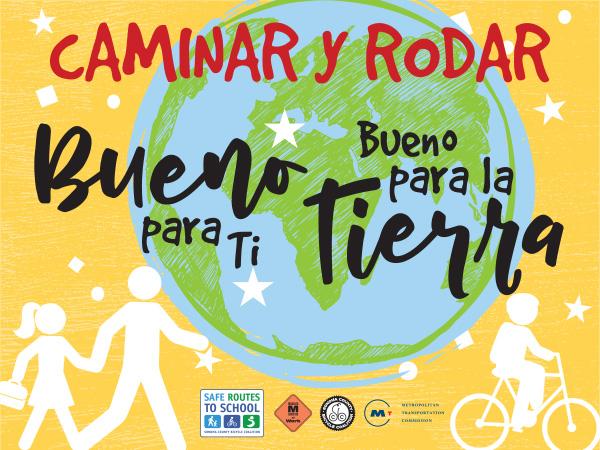
JOIN US IN CELEBRATING WALK & ROLL FOR THE EARTH MONTH THIS APRIL!
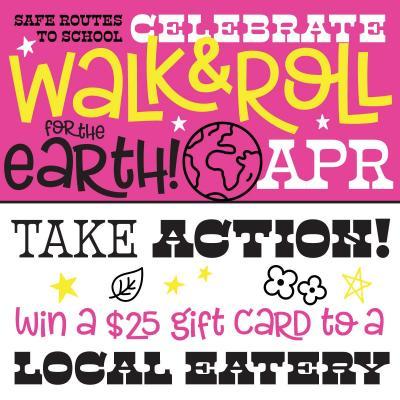
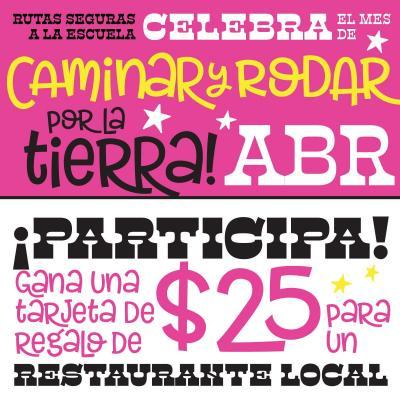
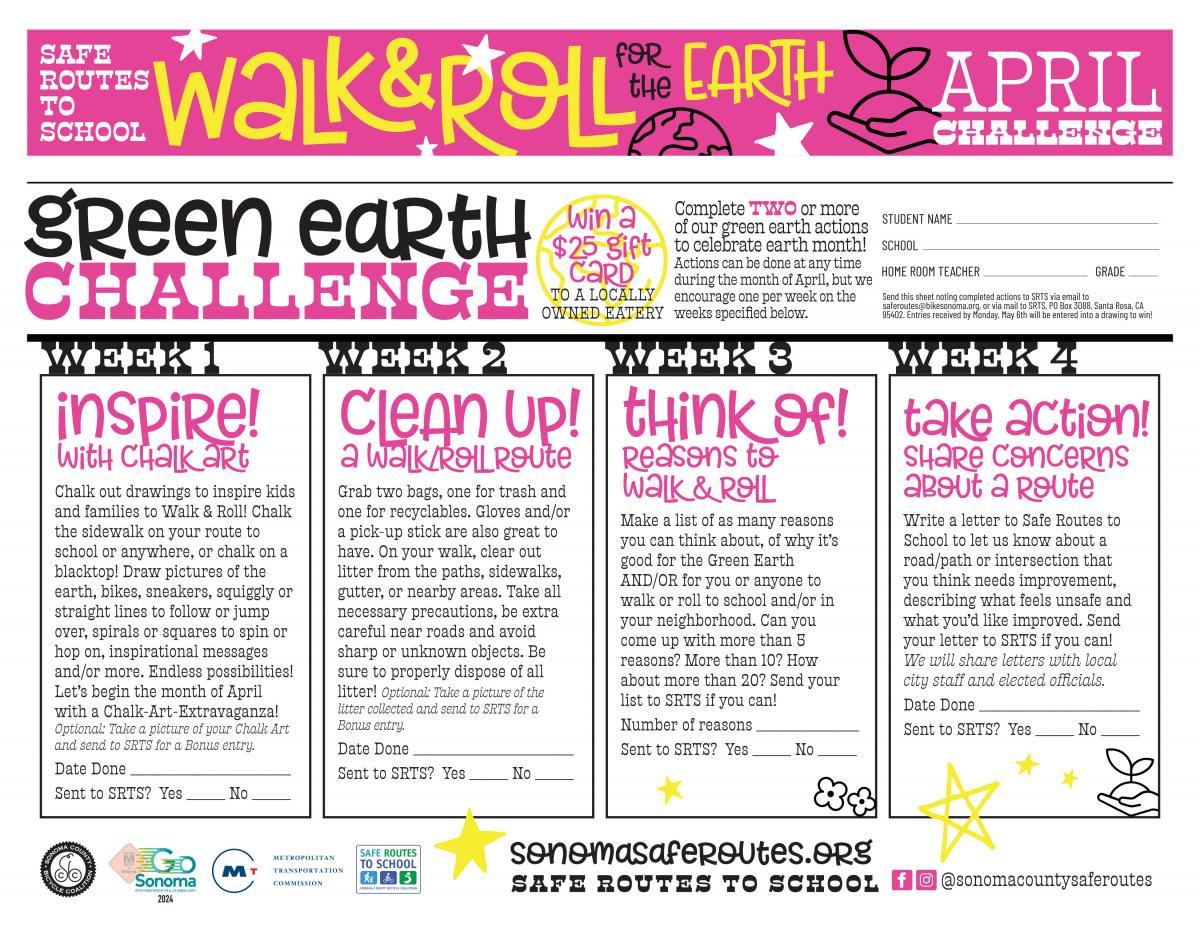
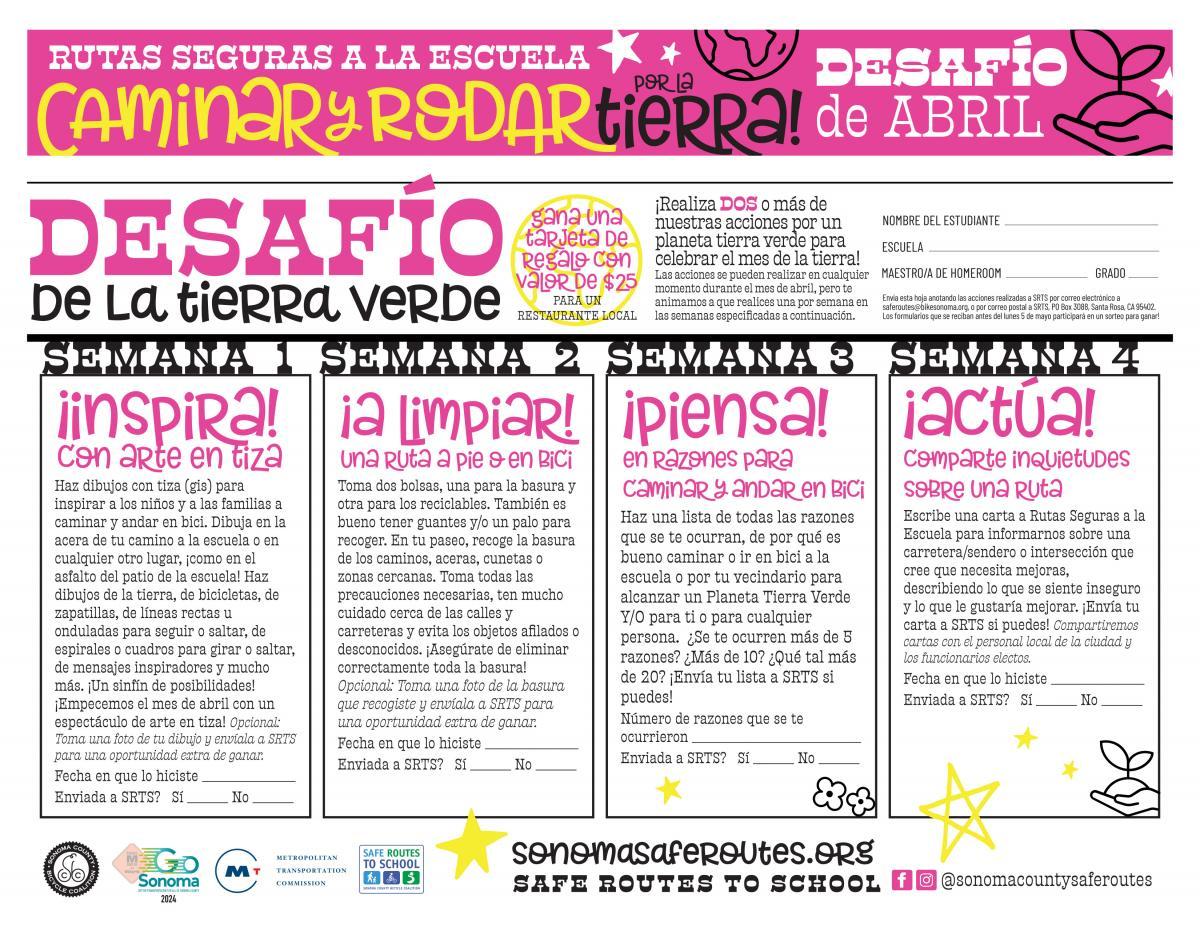
This April, we challenge you to walk, bike, scoot or skate to school, and then participating in our Green Earth Challenge by completing two or more of our Green Earth Actions during the month of April!
HOW TO PARTICIPATE IN WALK & ROLL FOR THE EARTH MONTH
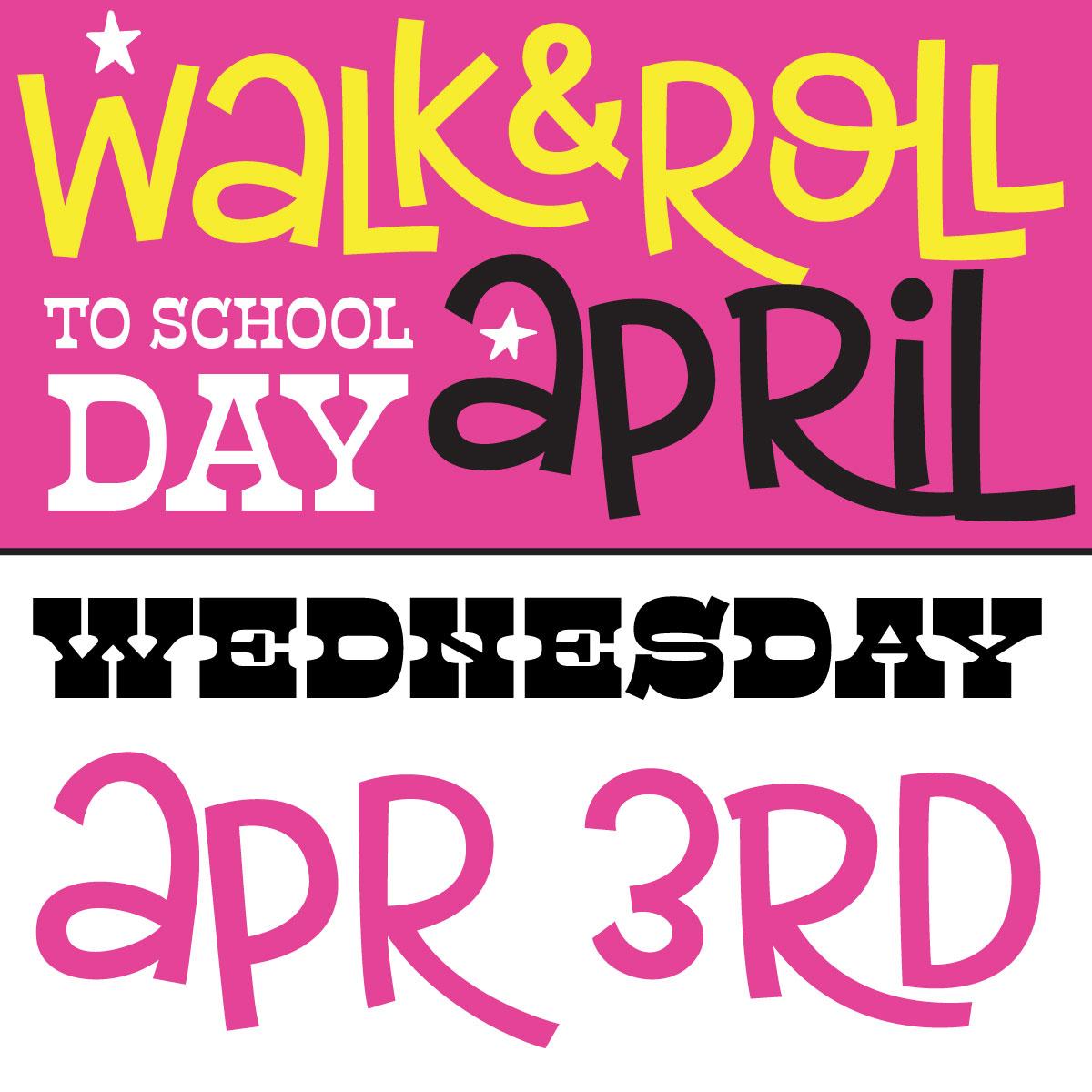
1. PARTICIPATE IN YOUR SCHOOL'S WALK & ROLL TO SCHOOL DAY AND/OR WALK, SCOOTER, SKATE, or BIKE to/from SCHOOL OR ANYWHERE WHENEVER YOU CAN!
2. COMPLETE TWO OR MORE ACTIONS FROM OUR GREEN EARTH CHALLENGE AND SUBMIT TO SRTS FOR A CHANCE TO WIN A $25.00 GIFT CARD TO A LOCAL EATERY OF YOUR CHOICE!
Choose two or more actions to complete. You can inspire others with chalk art related to Walk & Rolling, clean up a Walk & Roll route in your neighborhood, make a BIG list of reasons to Walk and Roll, and…OR write to us about a route that you think is safe OR unsafe for walking or biking.
You can complete the actions on the weeks indicated on the Green Earth Challenge, or you can do them at anytime during the month of April.
Mark your challenge sheet with the Challenges you have completed. Send us "proof" of your completed challenge if you can, but if you can't sent proof, just note that you've done it on the Challenge sheet and turn the sheet into SRTS.
Submissions must be received by Monday, May 6th
Each Green Earth Challenge submission will be entered into a drawing for a $25.00 gift card to a locally owned eatery of your choice. Winners will be announced in May and gift cards will be delivered directly to winners.
JOIN US IN CELEBRATING NATIONAL (AND SONOMA COUNTY) BIKE TO SCHOOL DAY THIS MAY!
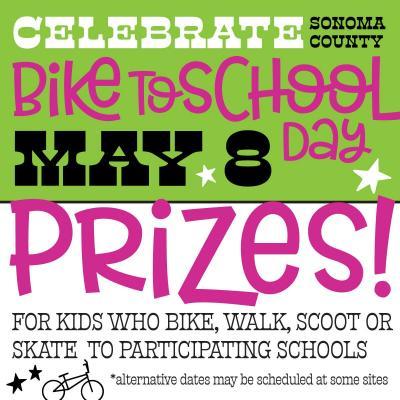
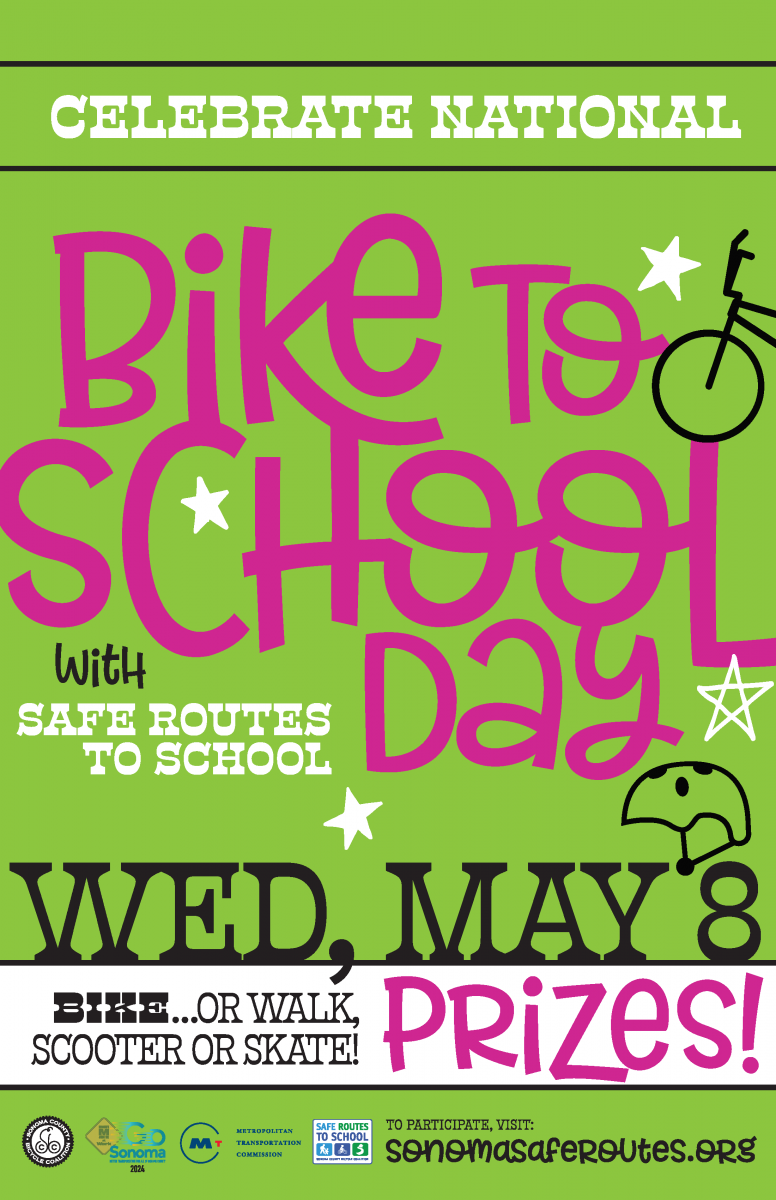
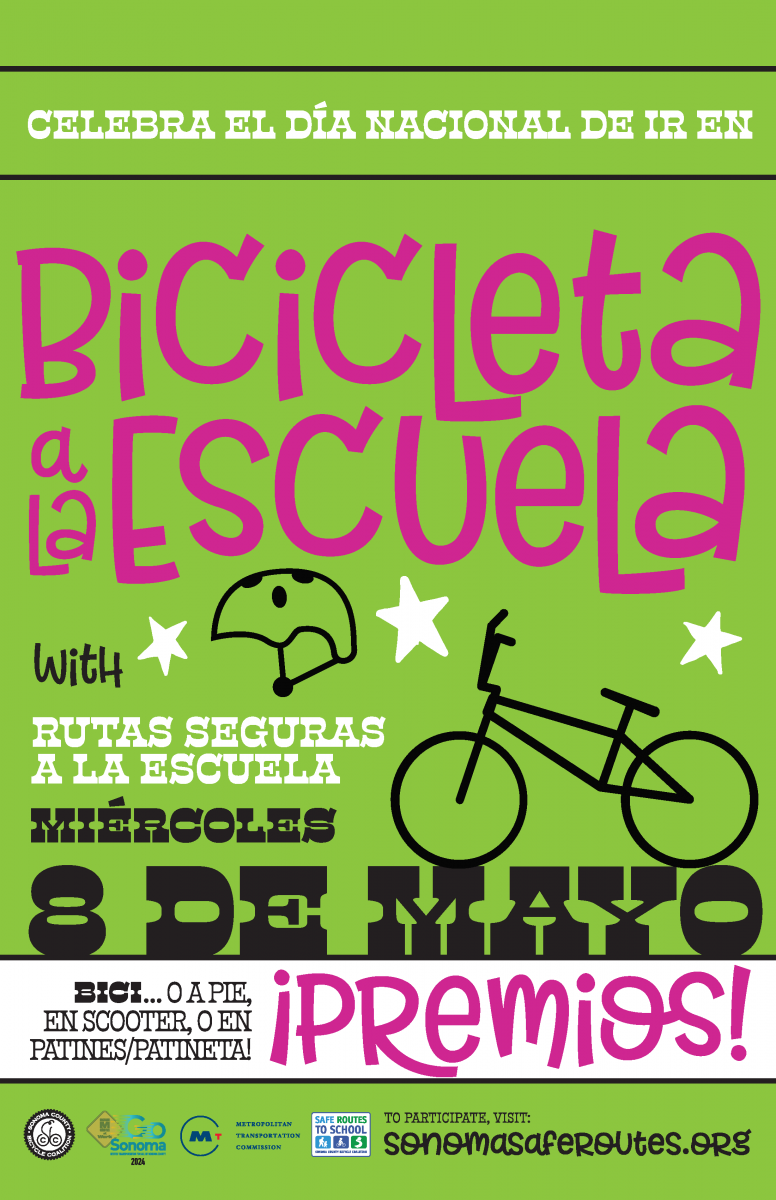
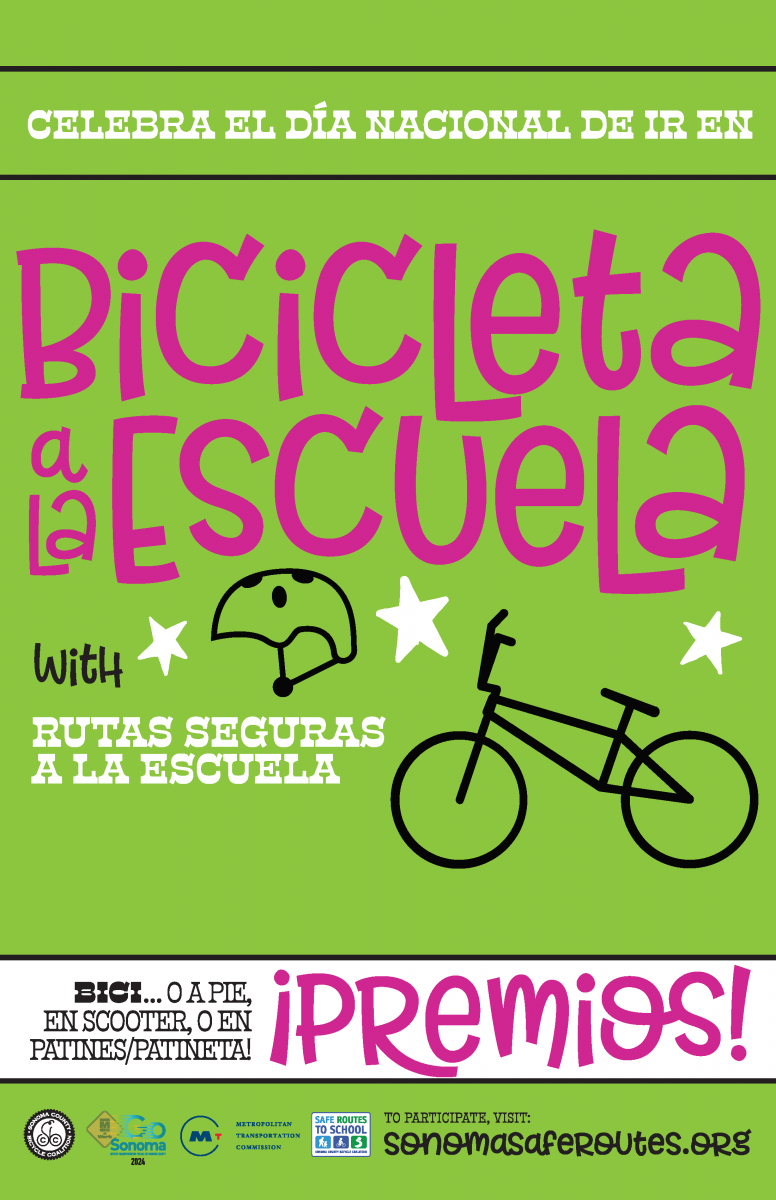
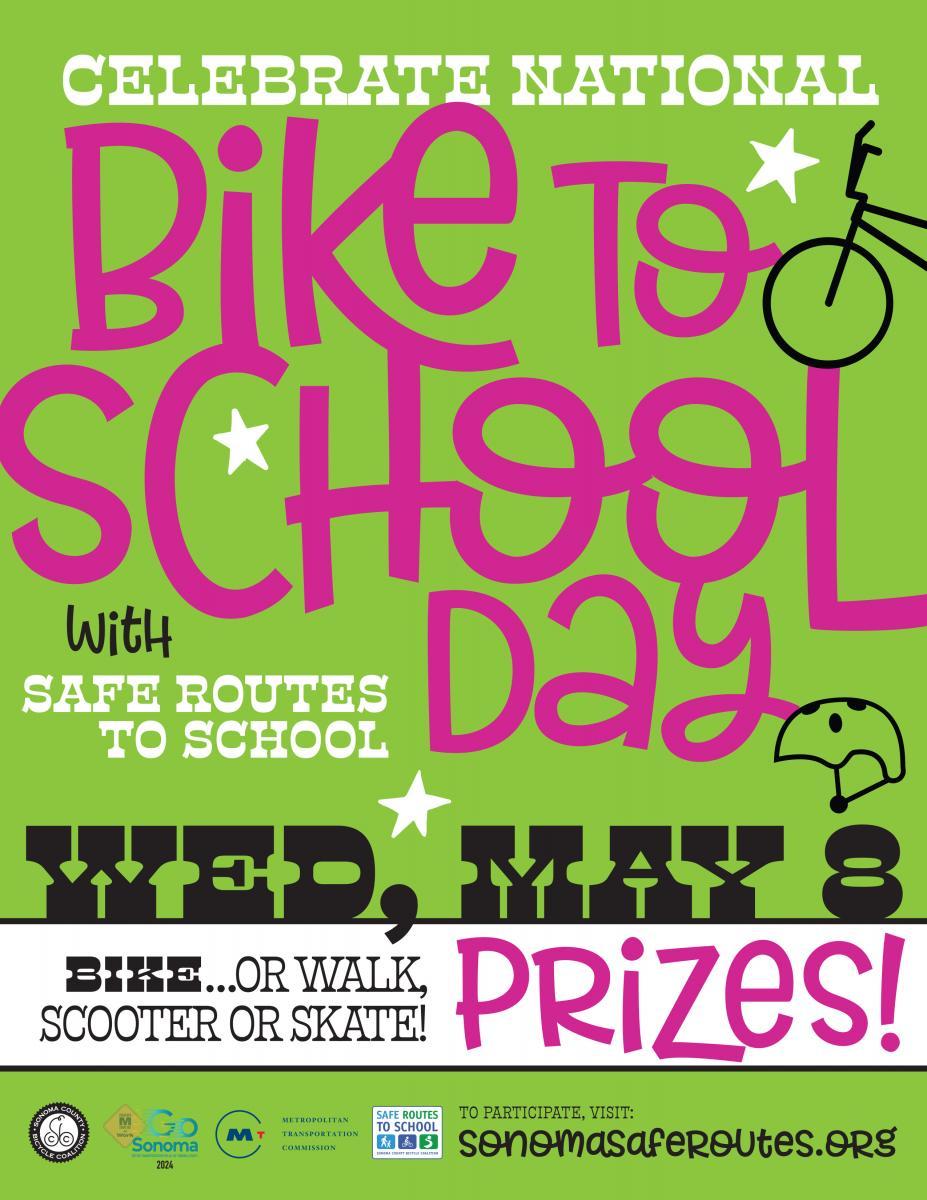
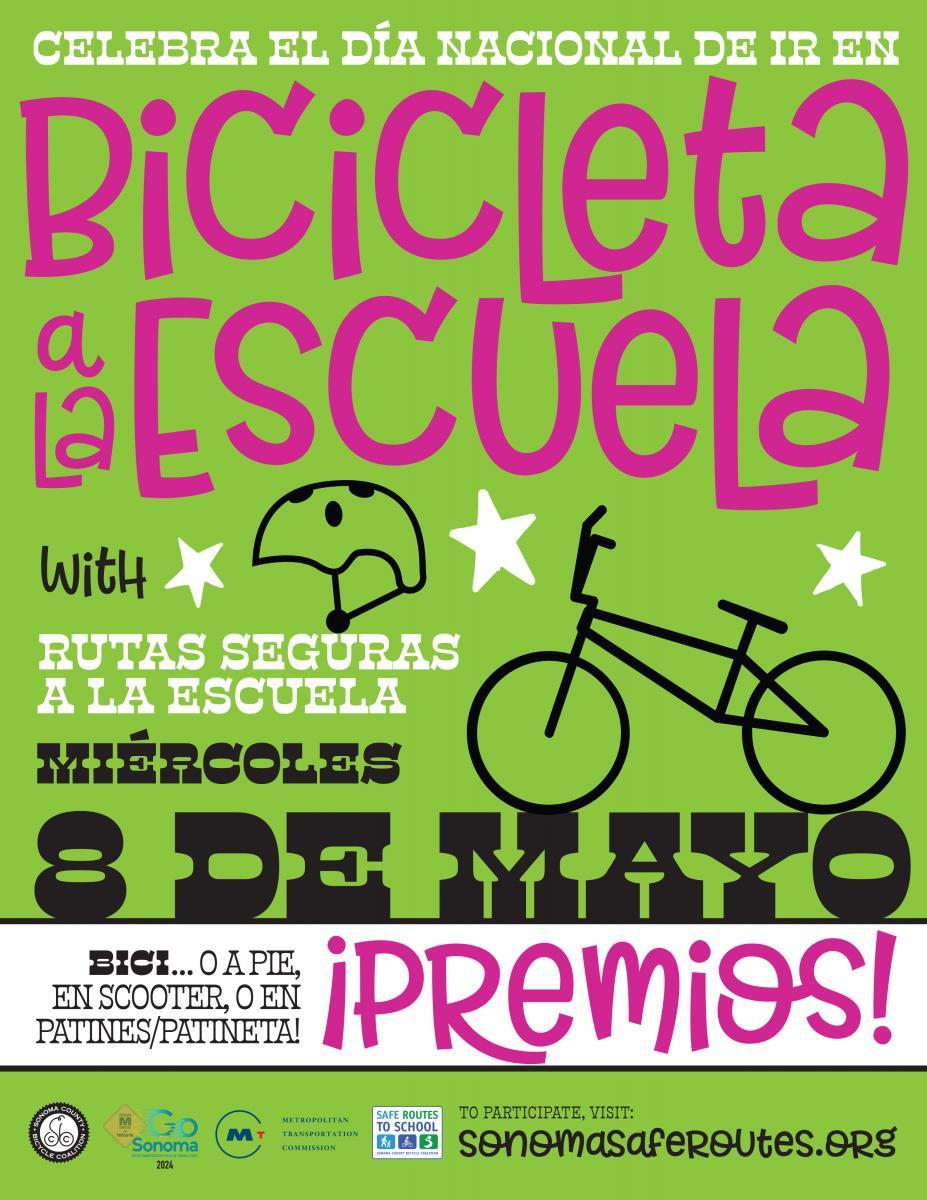
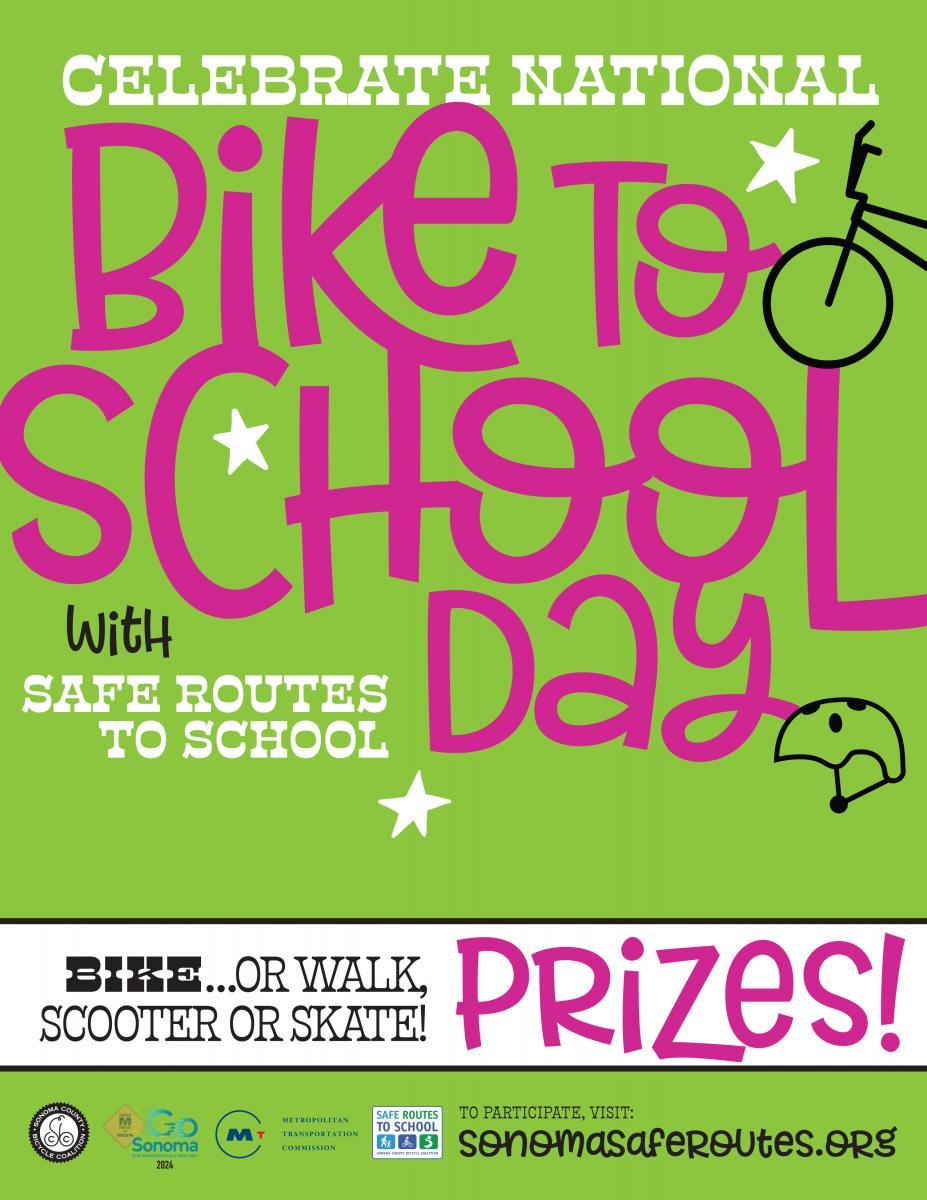
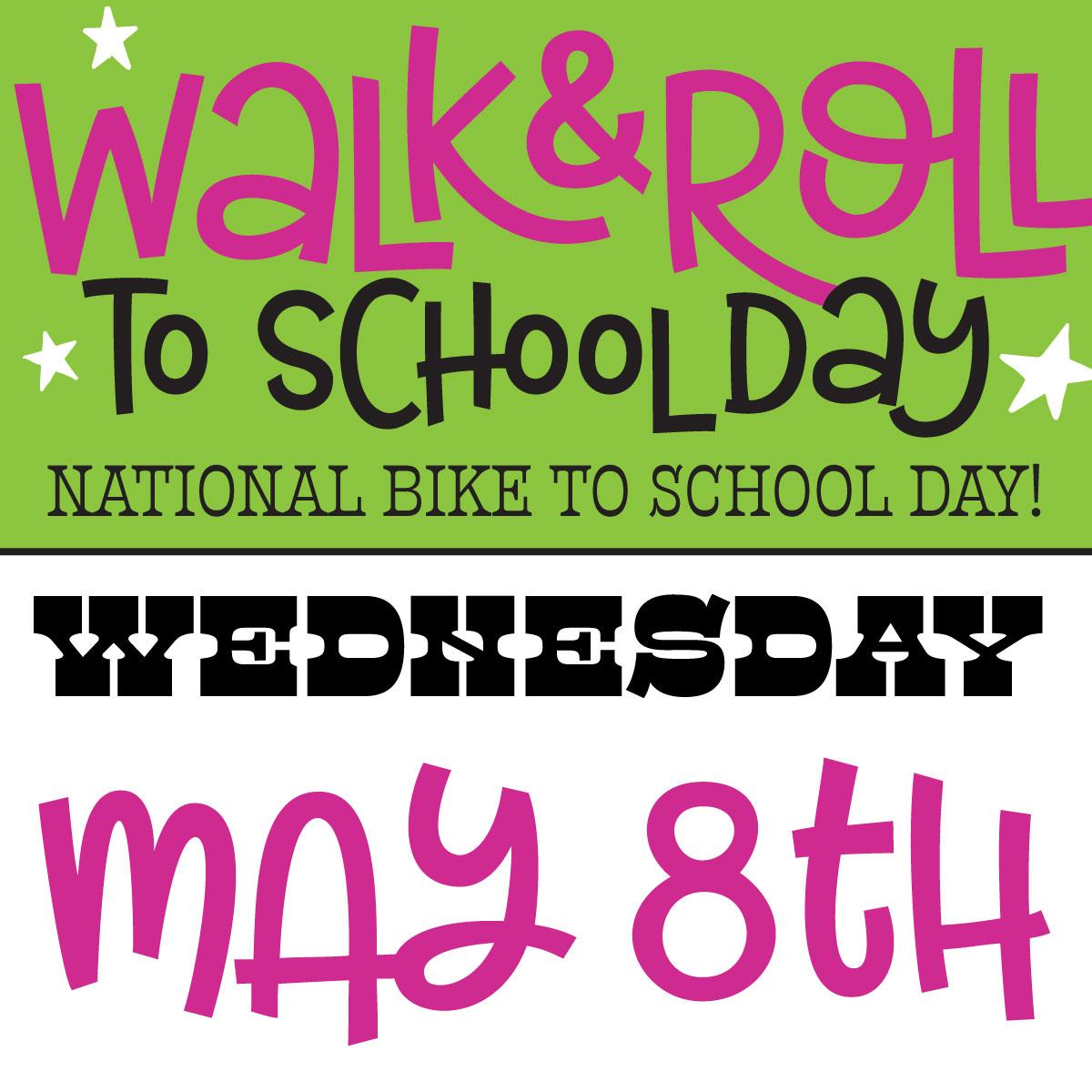
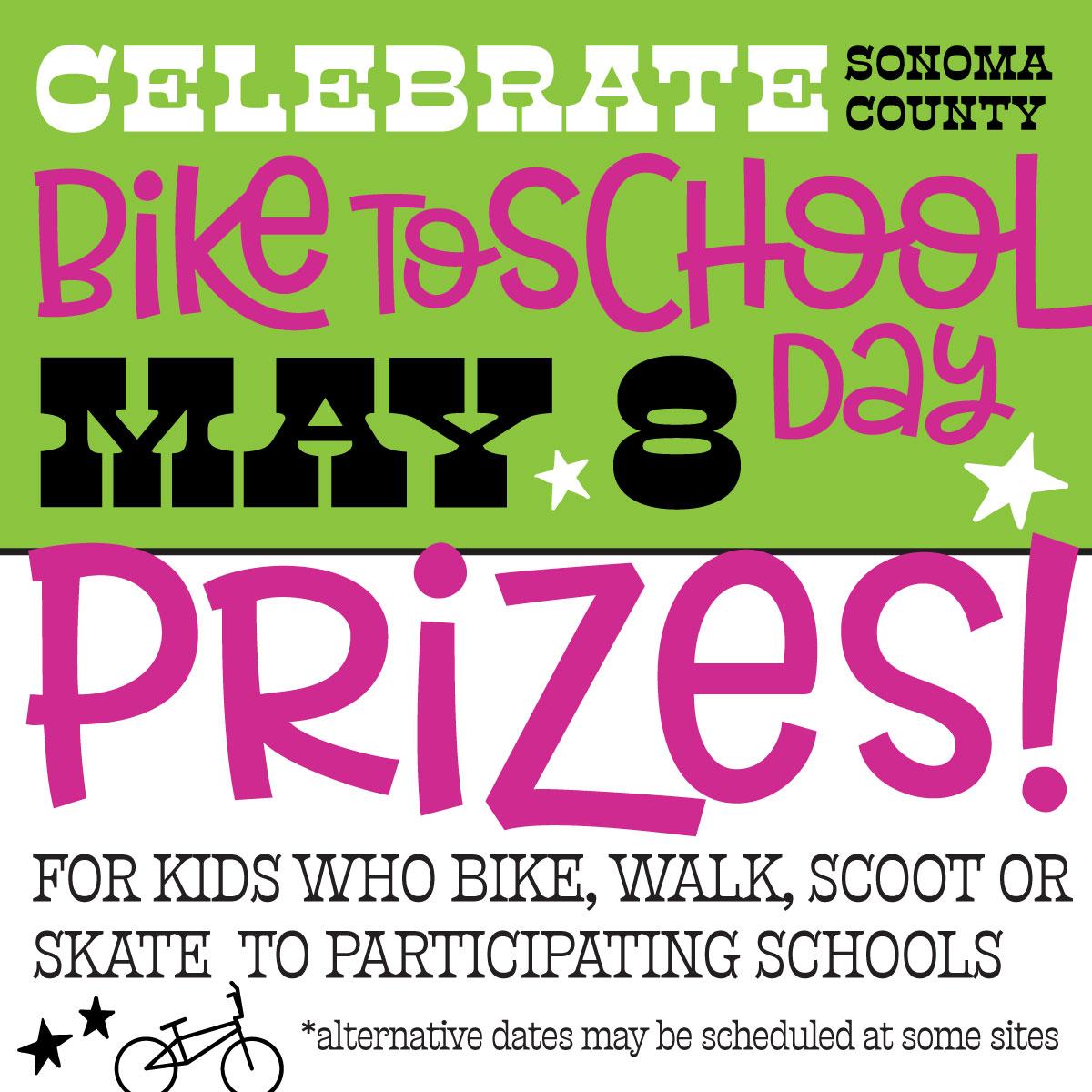
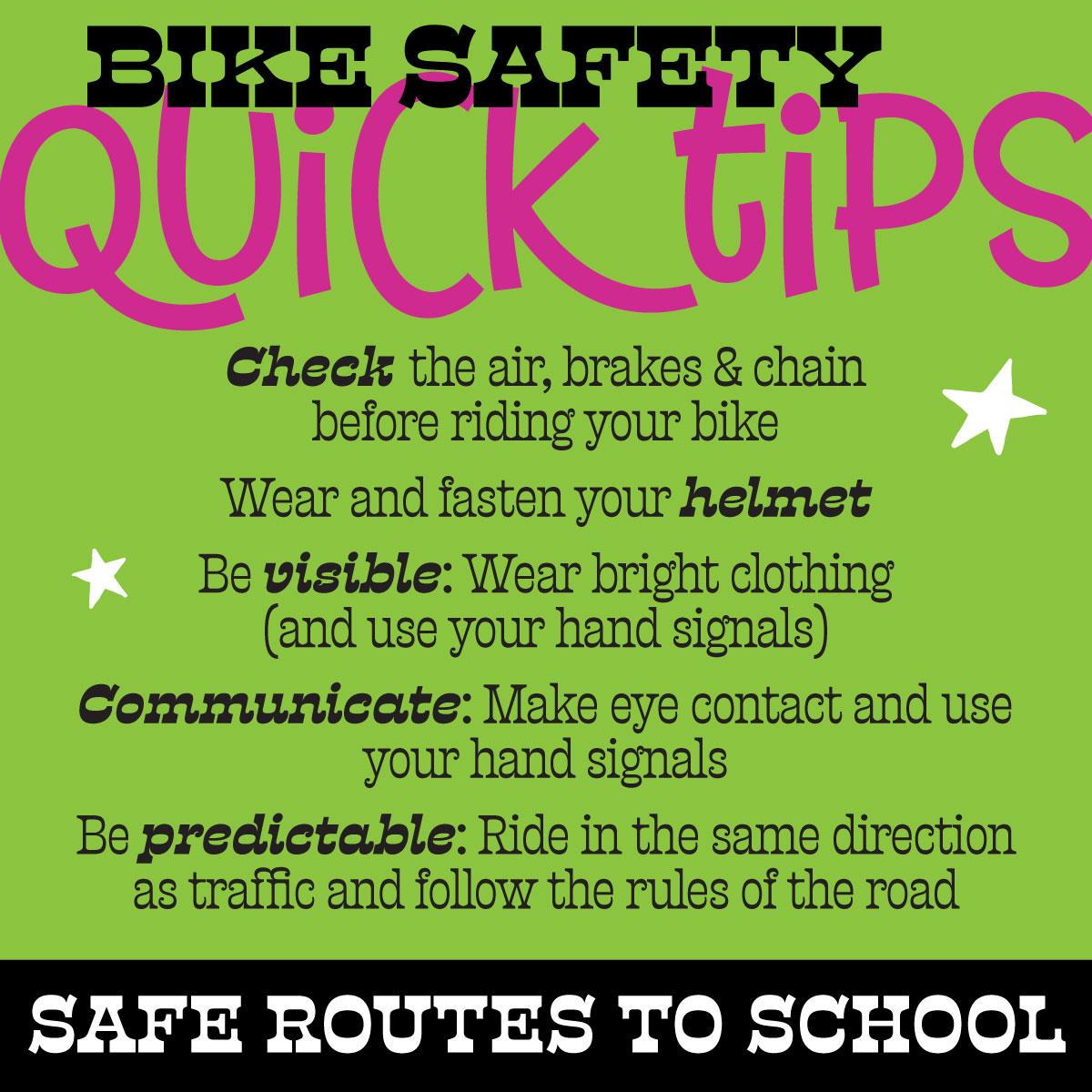
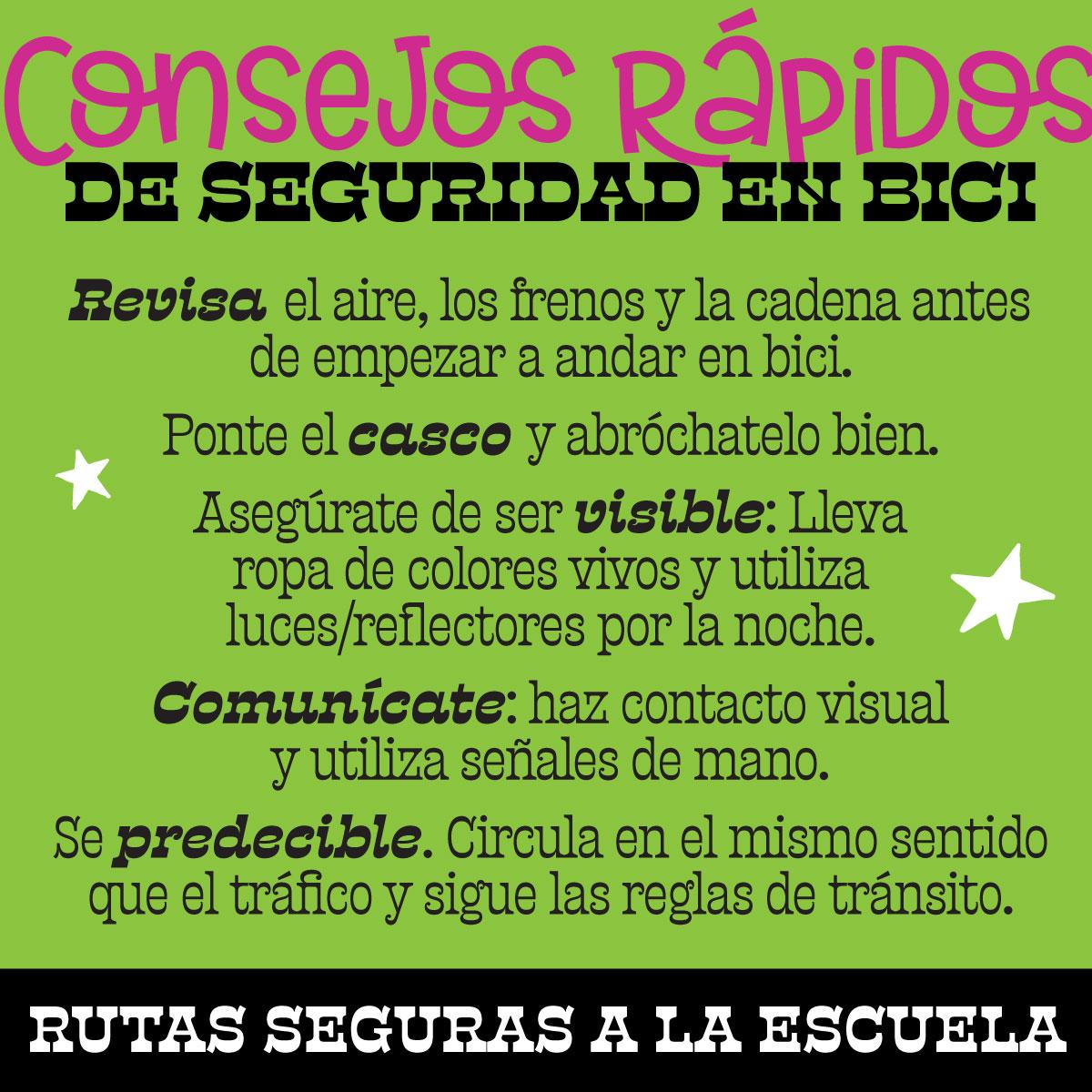
Beautiful spring days are the perfect time to strap on your helmets, hop on your bikes, and pedal away in celebration of the joy and independence of bicycling! Celebrate National Bike Month by participating in Bike to School Day on Wednesday May 8th (or the date your school is holding their event)! Participating Schools will be giving prizes to kids who bike, walk, scooter, skate, or utilize any form of active transportation to school on their event day!
HOW CAN MY SCHOOL PARTICIPATE IN BIKE TO SCHOOL DAY THIS MAY?
Registration for Sonoma County's event is open until Wednesday, April 10th, 2024. Registered schools receive posters, promotional prizes, and are included on the list of schools sent to partners in law enforcement, the media, etc.
Check with your school to find out if they are holding an event on May 8th or on an alternative date in May. Even if your school is not holding a celebratory "event", we encourage you to try bicycling to school or anywhere this May!
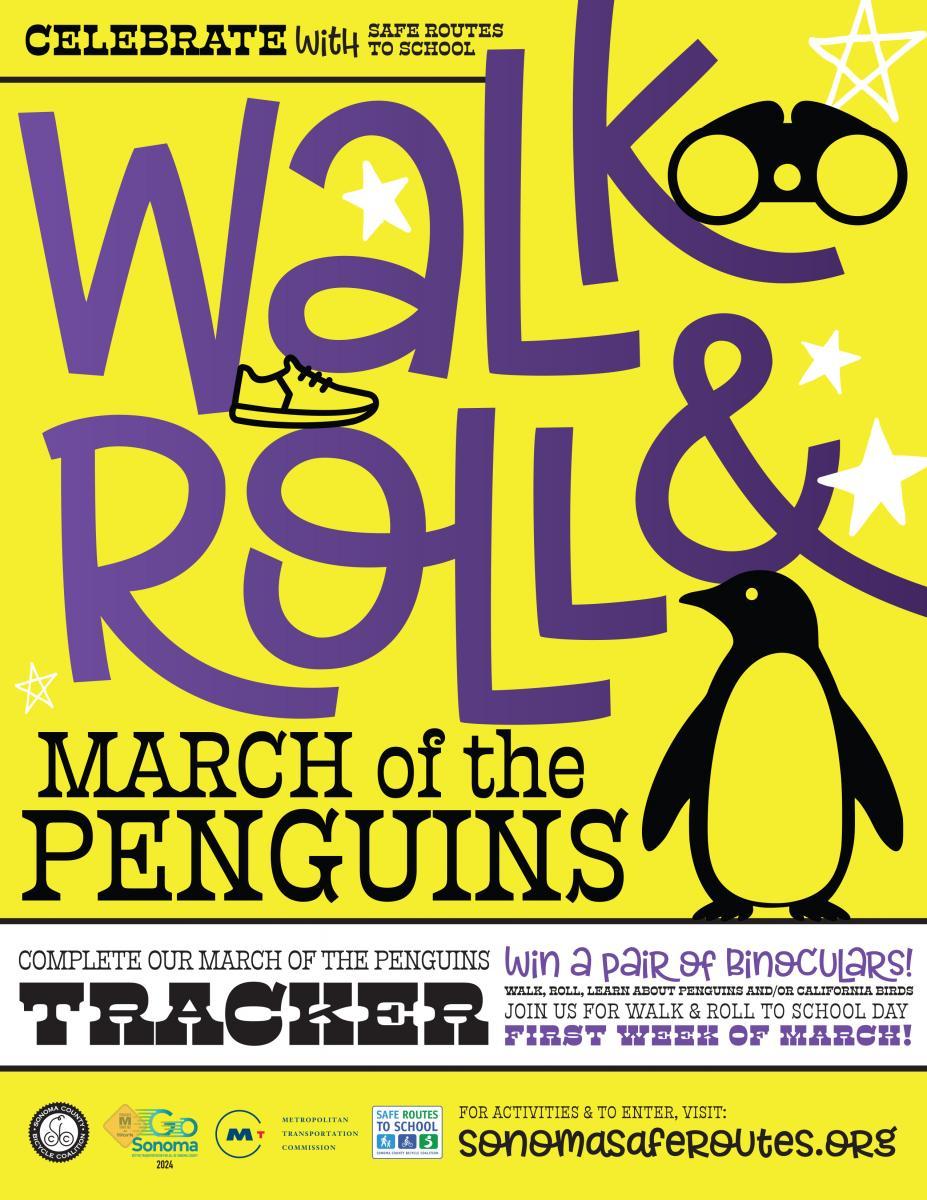
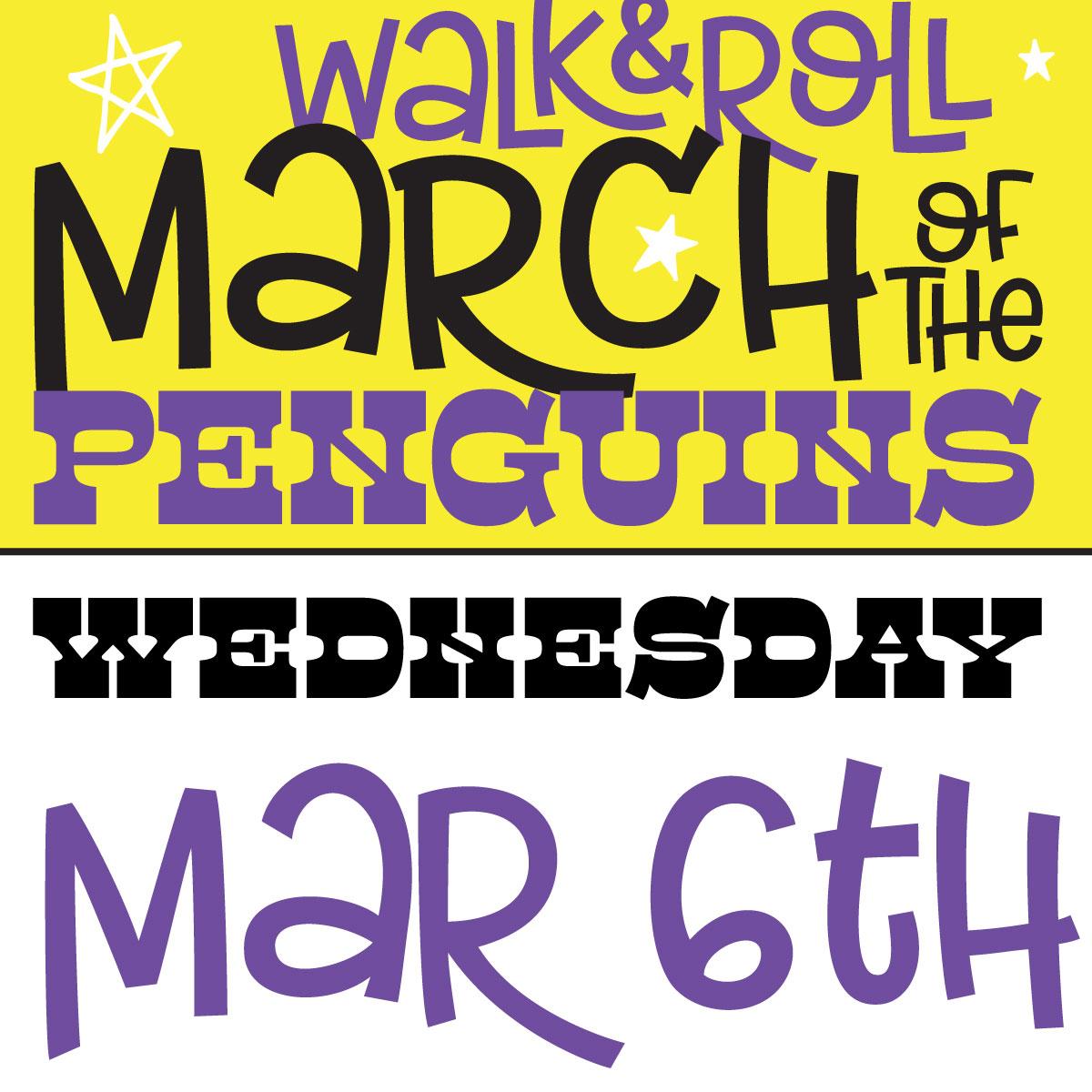
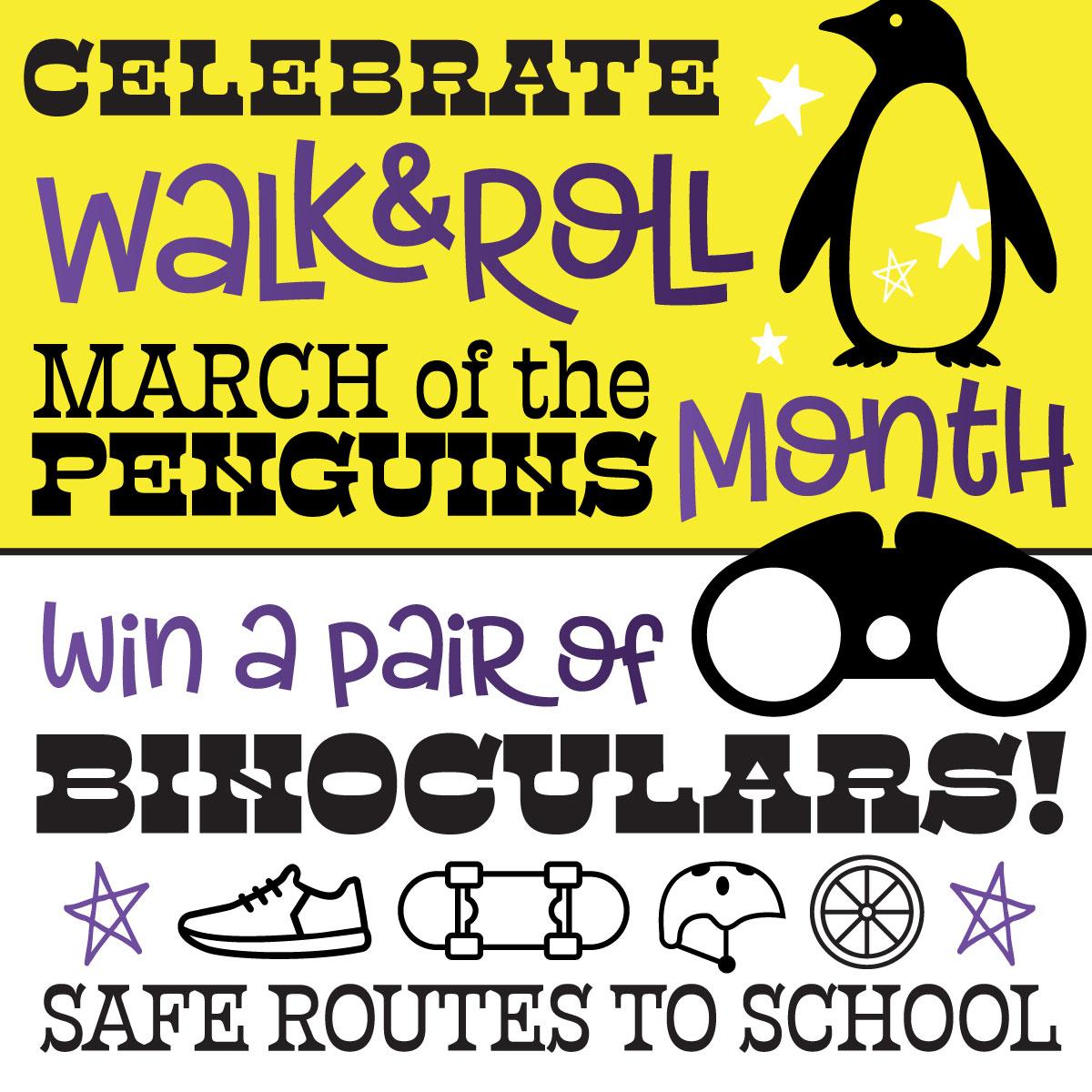
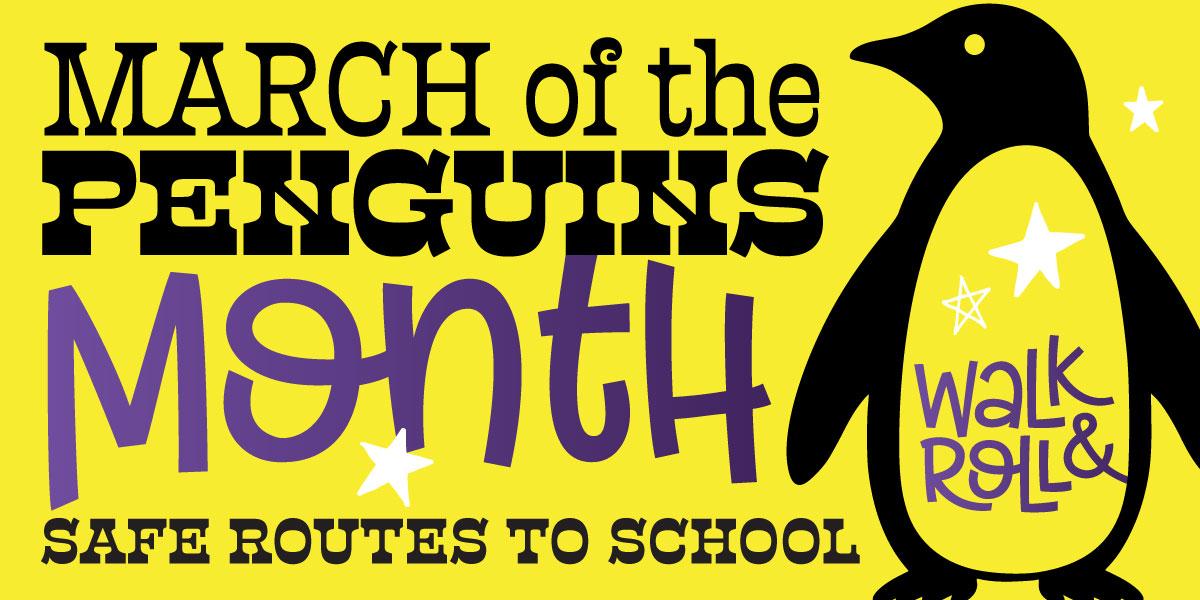
JOIN US IN CELEBRATING MARCH OF THE PENGUINS MONTH THIS MARCH!
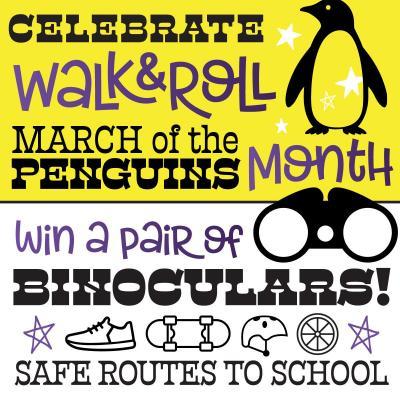
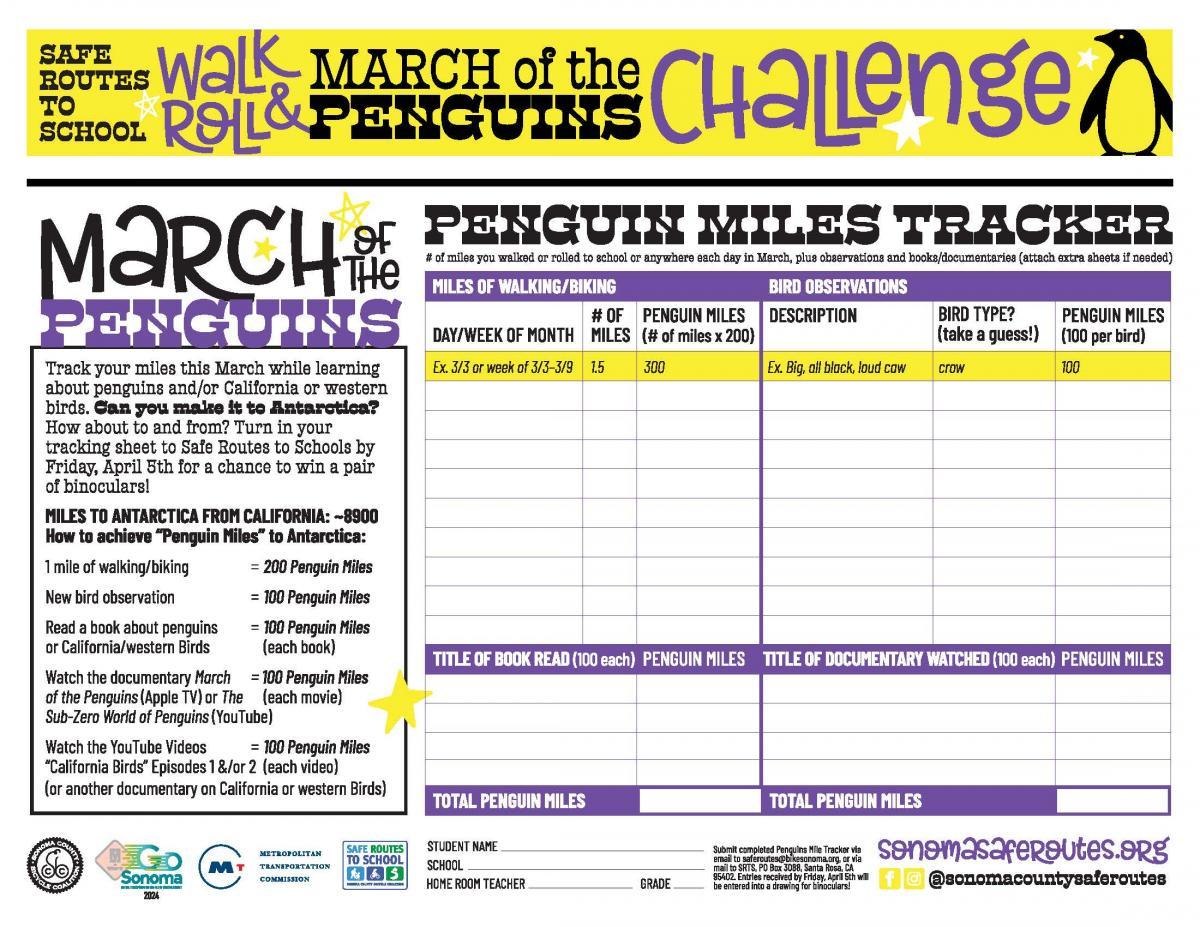
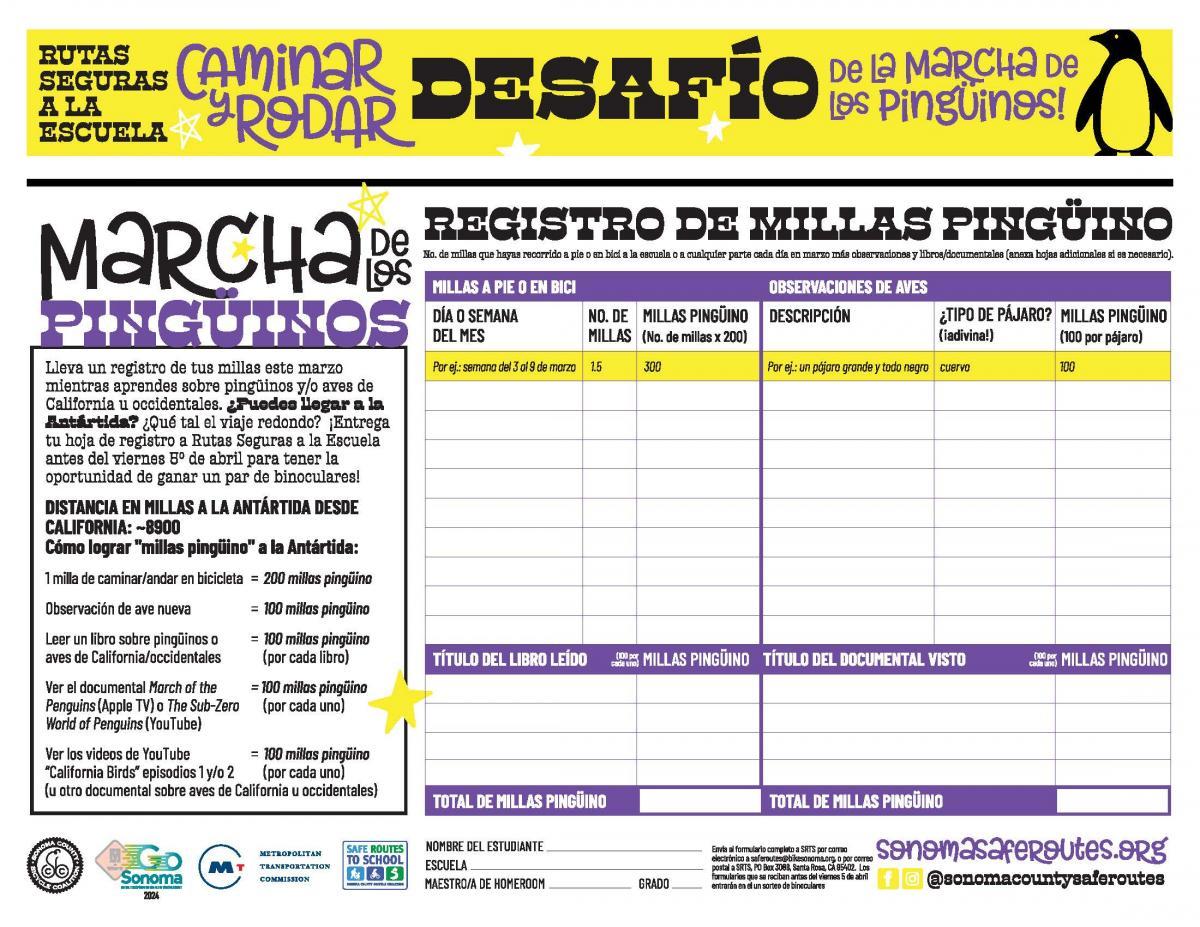
This March, we challenge you to get outside and march with the penguins! Walk or Roll to School (or anywhere) on as many days as you can during the month of March, and track "penguin" miles while learning about penguins or California/western birds. Can you make it to Antarctica? How about to and from? You can earn penguin miles for every mile walked, by observing california birds, or by reading books or watching documentaries about penguins OR California/western birds! Find out your mileage by using Google maps or asking an adult. Your submitted March of the Penguins tracking sheet is an entry for a drawing for a fabulous pair of binoculars!
HOW TO PARTICIPATE IN MARCH OF THE PENGUINS MONTH
1. Participate in your school's Walk & Roll to School Day and/or walk, scooter, skate, or bike to/from school or anywhere whenever you can!
2. Complete and submit our MARCH OF THE PENGUINS TRACKING SHEET for a chance to win a pair of binoculars!
MARCH OF THE PENGUINS TRACKING SHEET INSTRUCTIONS:
Walk, bike, scoot or skate on as many days as you are able to during the month of March - every mile you walk earns 200 "penguin miles"
Observe & record information about California birds - every observation earns 100 penguin miles
Read a book or watch a documentary about California/western birds OR about Penguins - each book or documentary earns 100 penguin miles
Submit to Safe Routes to School (may be submitted via email or the mail), must be received by Monday, April 1st
ALL March Challenge submissions will be entered into a drawing for a fabulous pair of binoculars! Winners will be announced in April and Sneakers will be delivered directly to winners.
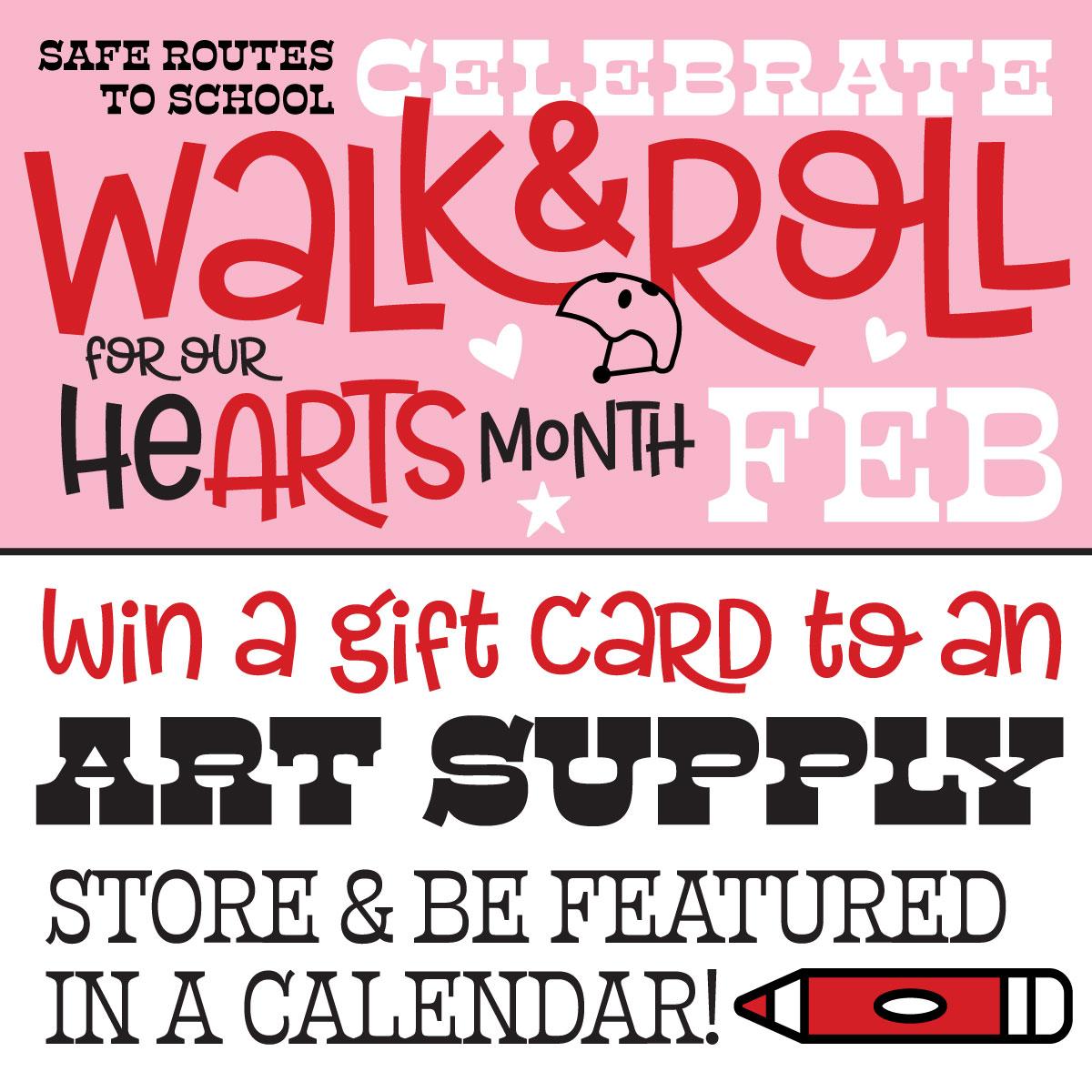
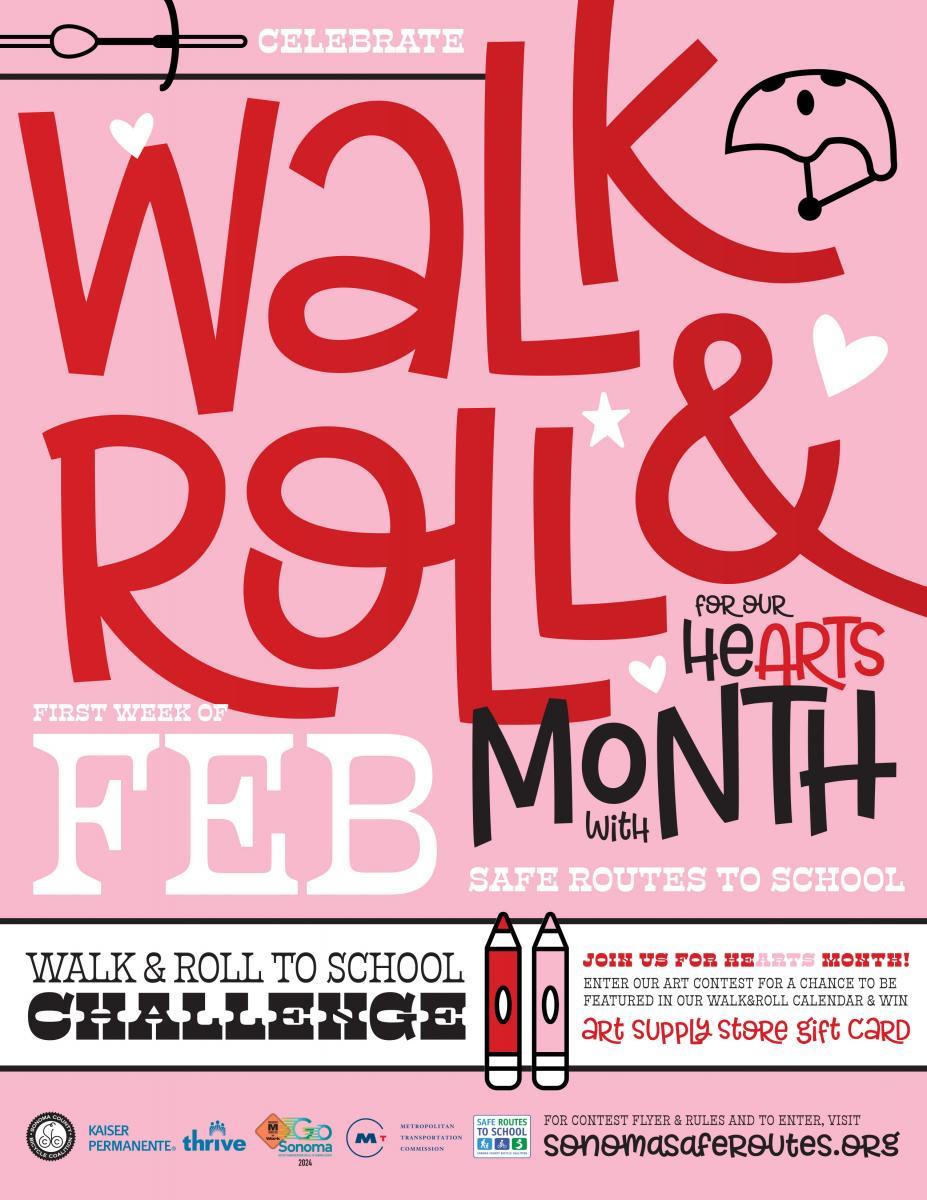
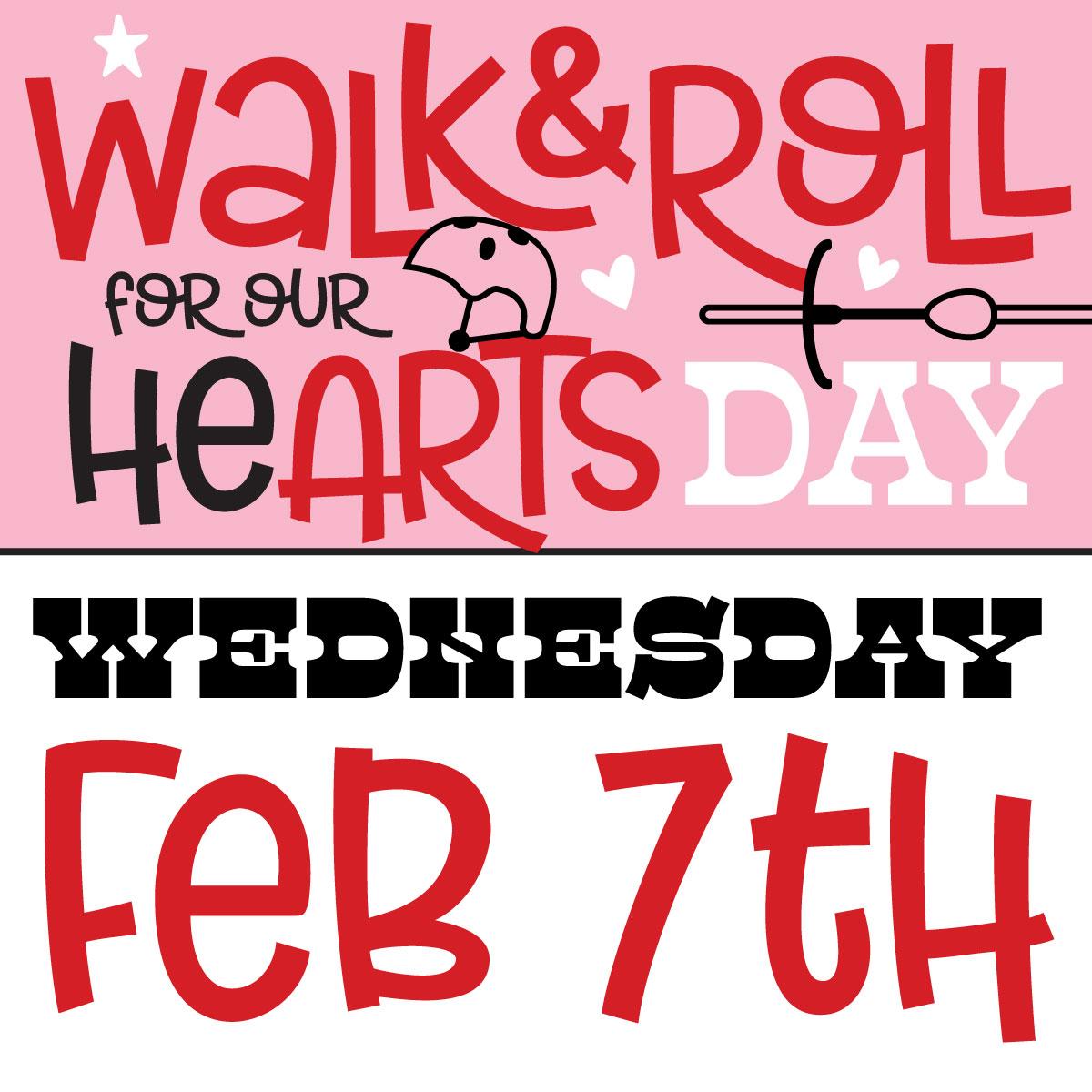
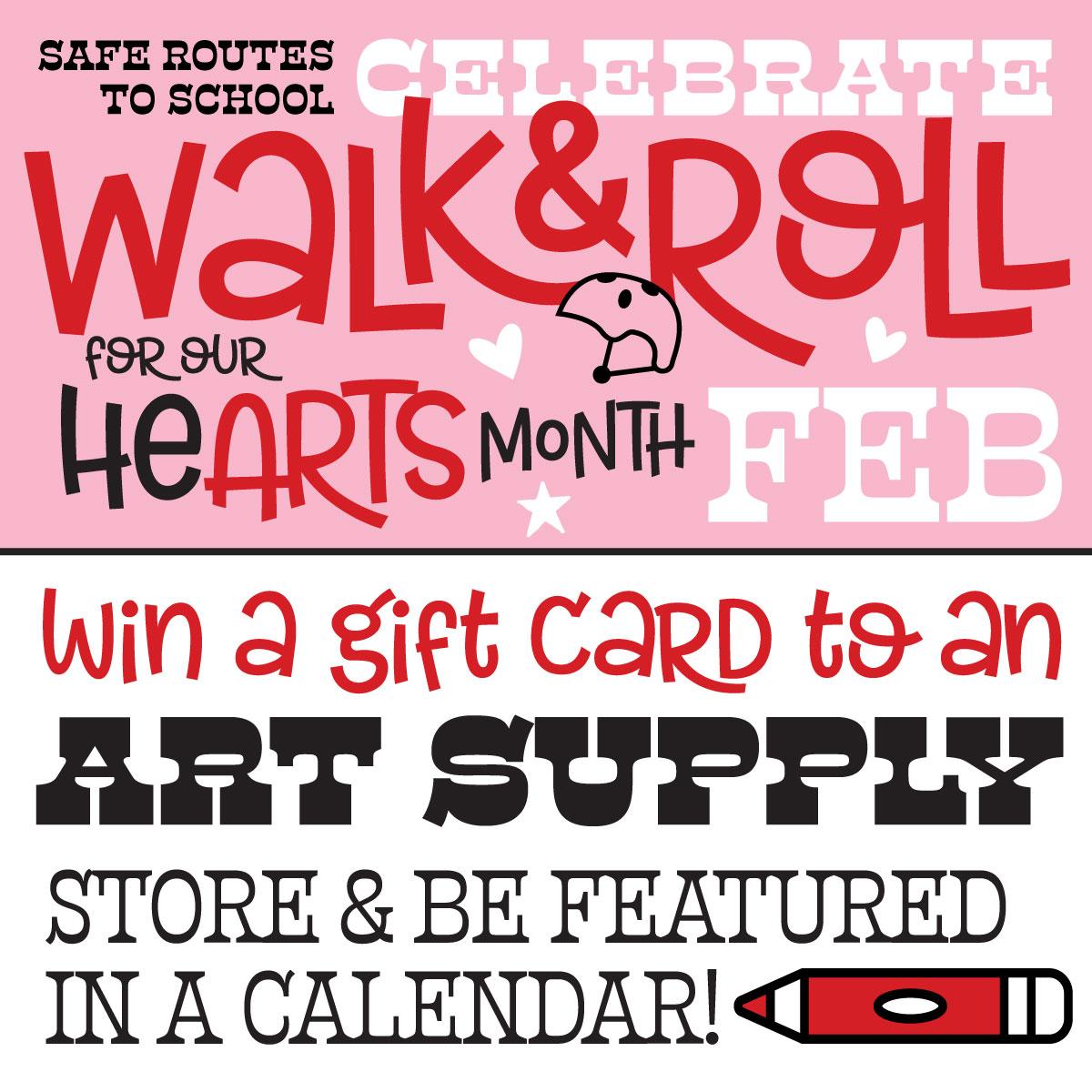
JOIN US IN CELEBRATING WALK & ROLL FOR OUR HeARTS MONTH THIS FEBRUARY!
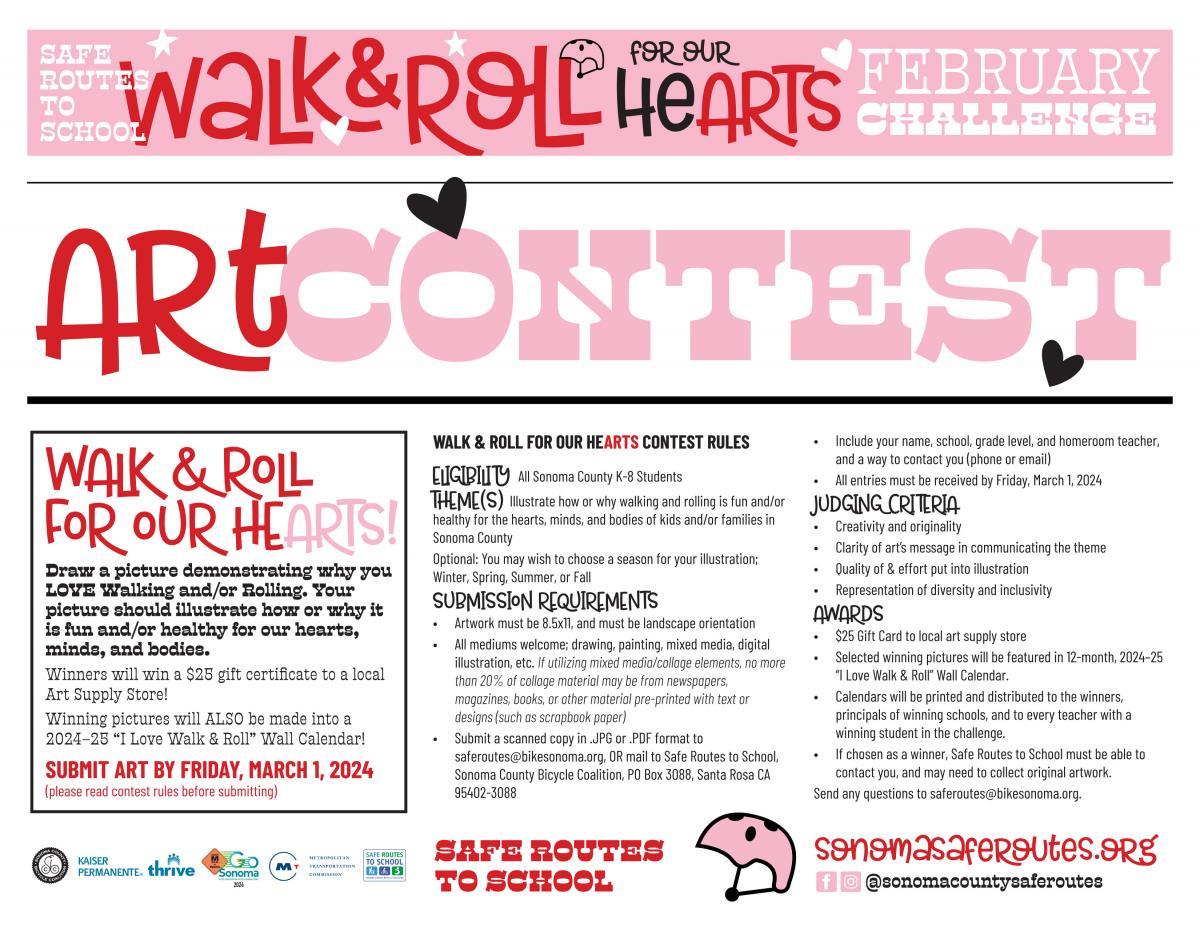
This February, we challenge you to walk & roll to school, explore your neighborhoods, and stretch your artistic muscles by drawing about what you LOVE about Walking & Rolling, for a chance to win a $25.00 gift card to a local Art Supply store and/or be featured in a printed "Walk & Roll for Our HeARTS" calendar! Thank you to Kaiser Permanente Northern California for sponsoring our February Challenge!
HOW TO PARTICIPATE IN WALK & ROLL FOR OUR HeARTS MONTH
1. Participate in your school's Walk & Roll to School Day and/or walk to/from school or anywhere whenever you can!
2. DRAW A PICTURE DEMONSTRATING WHY YOU LOVE WALKING AND/OR ROLLING. Your picture should illustrate why or how it is fun and/or healthy for our hearts, minds and bodies.
3. Then, submit your drawing to SRTS for a chance to win a $25.00 gift card to a local art supply store, and/or be featured in a "Walk & Roll for our HeARTS" printed wall calendar.
Put your best effort into an original picture illustrating why walking and/or rolling is fun and/or healthy for our hearts, minds and bodies.
Artwork must be 8.5"x11", and must be landscape orientation
All mediums are welcome: drawing, painting, mixed media, digital illustration, etc. If utilizing mixed media/collage elements, no more than 20% of collage materials may be from newspapers, magazines, books or other materials pre-printed with text or designs (such as scrapbook paper)
Submit a high-resolution, scanned copy in JPG or PDF format to saferoutes@bikesonoma.org OR mail to Safe Routes to School, Sonoma County Bicycle Coalition, PO Box 3088, Santa Rosa, CA 95402-3088
Include your name, school name, grade level, and homeroom teacher, and a way to contact you (phone or email)
Artwork will be judged on the following criteria: creativity and originality, clarity of art's message to communicating the theme, quality and effort put into illustration, and representation of diversity and inclusivity.
All entries must be received by Friday March 1, 2024
ALL February Challenge Submissions will be entered into a drawing for a $25.00 Art Supply Store gift card. Select submissions will be chosen to be featured in our Walk & Roll for Our HeARTS Printed Wall Calendar. Wall Calendars will be given to the winning students, the teacher of the winning students, and the principal of the winning students. Questions? Email Safe Routes to School
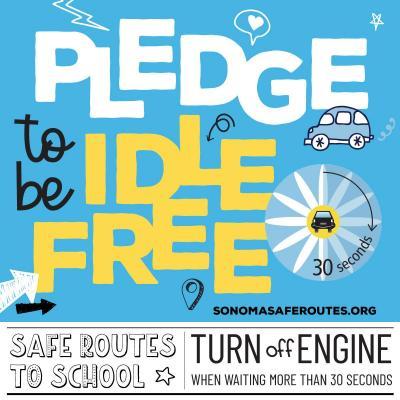
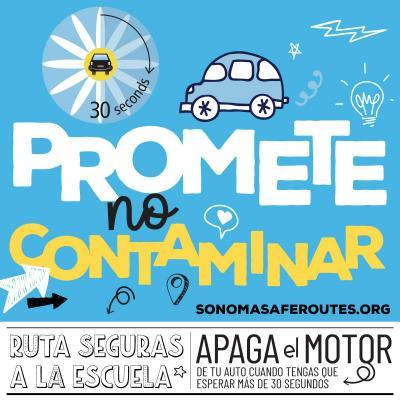
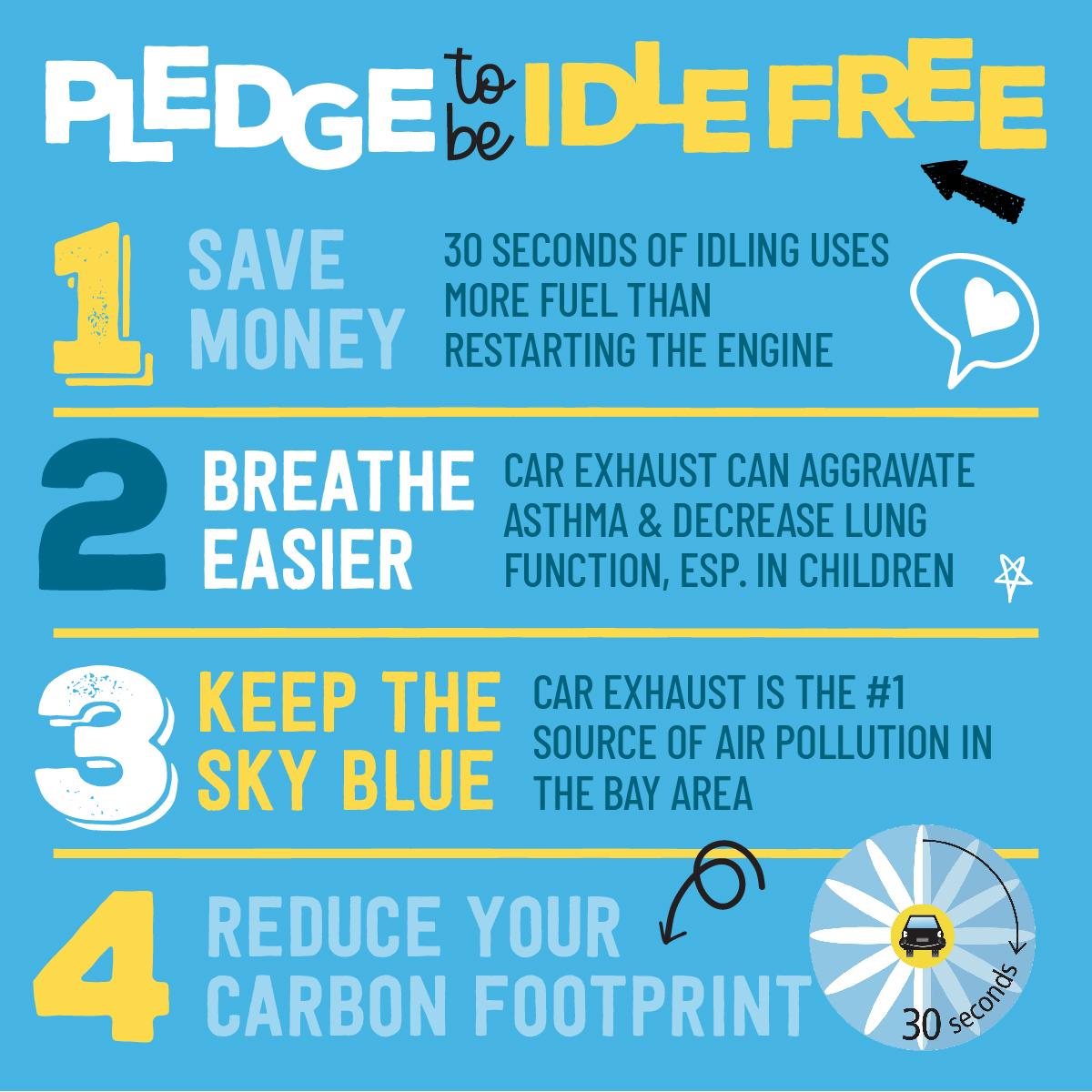
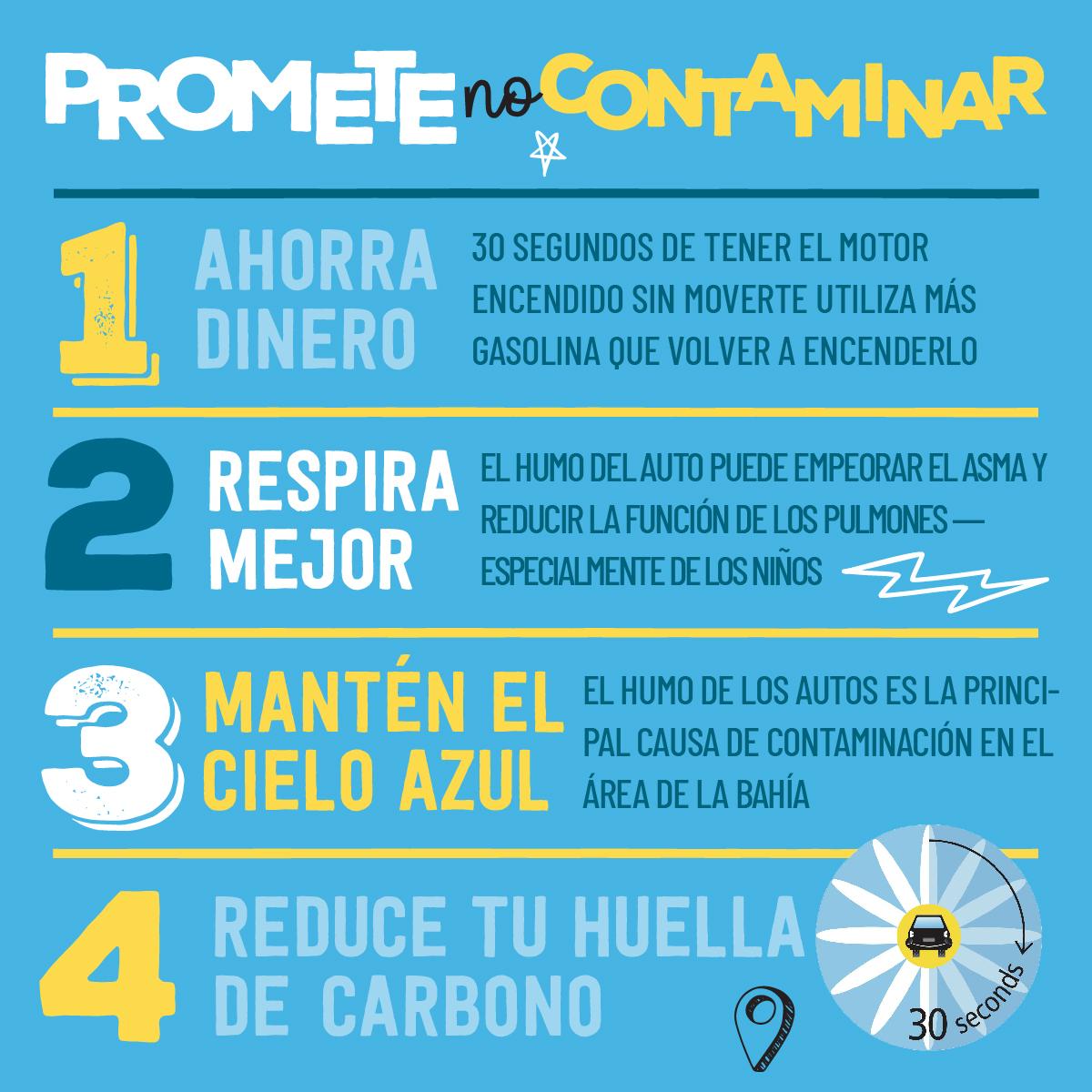
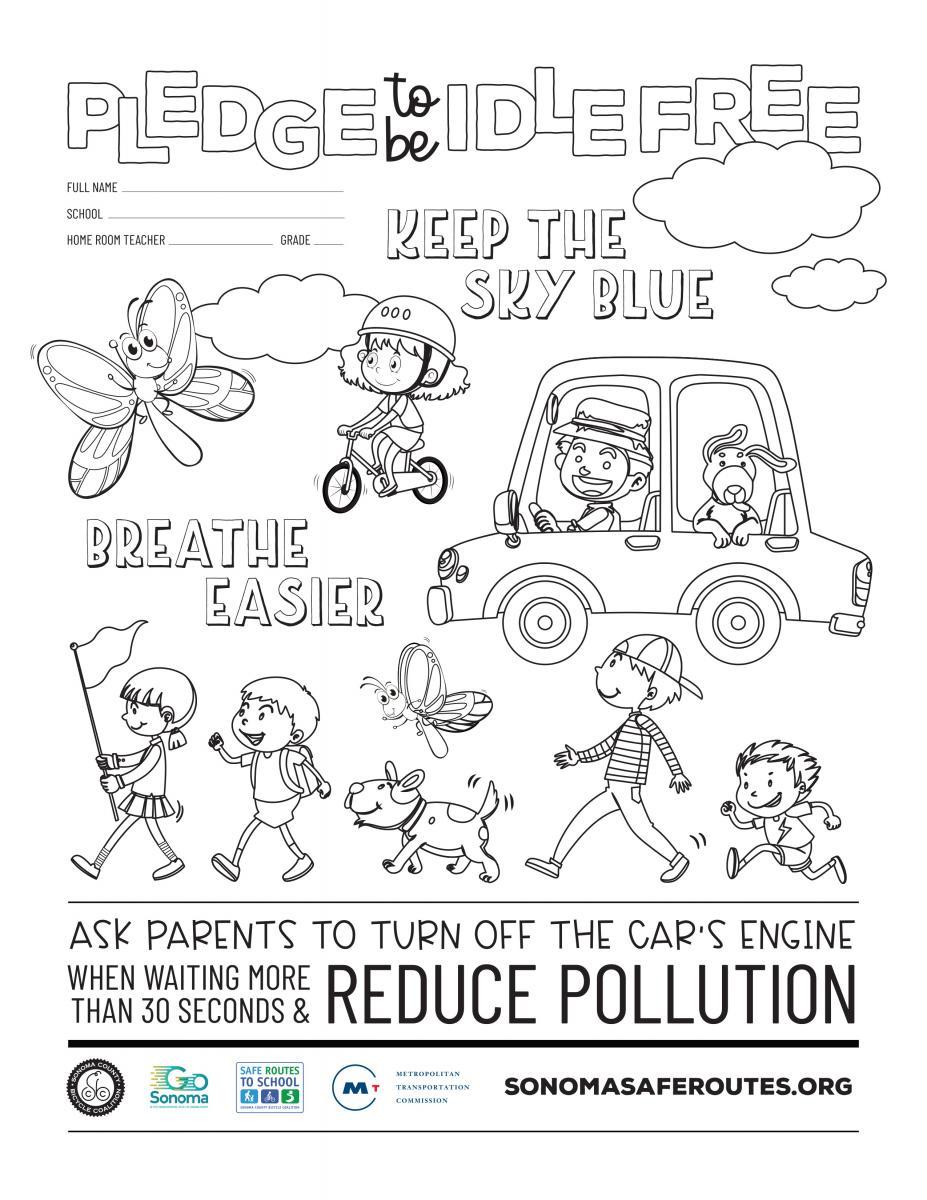
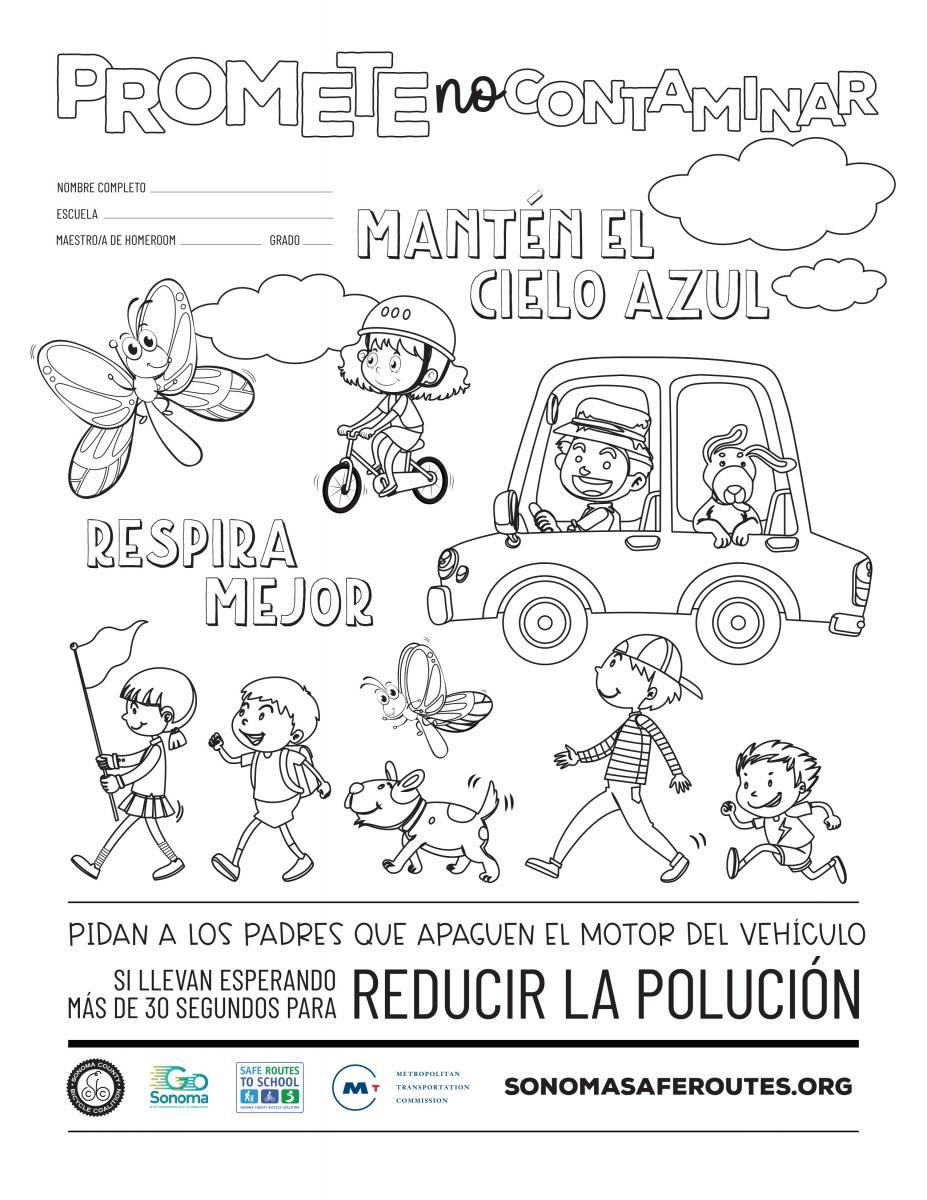
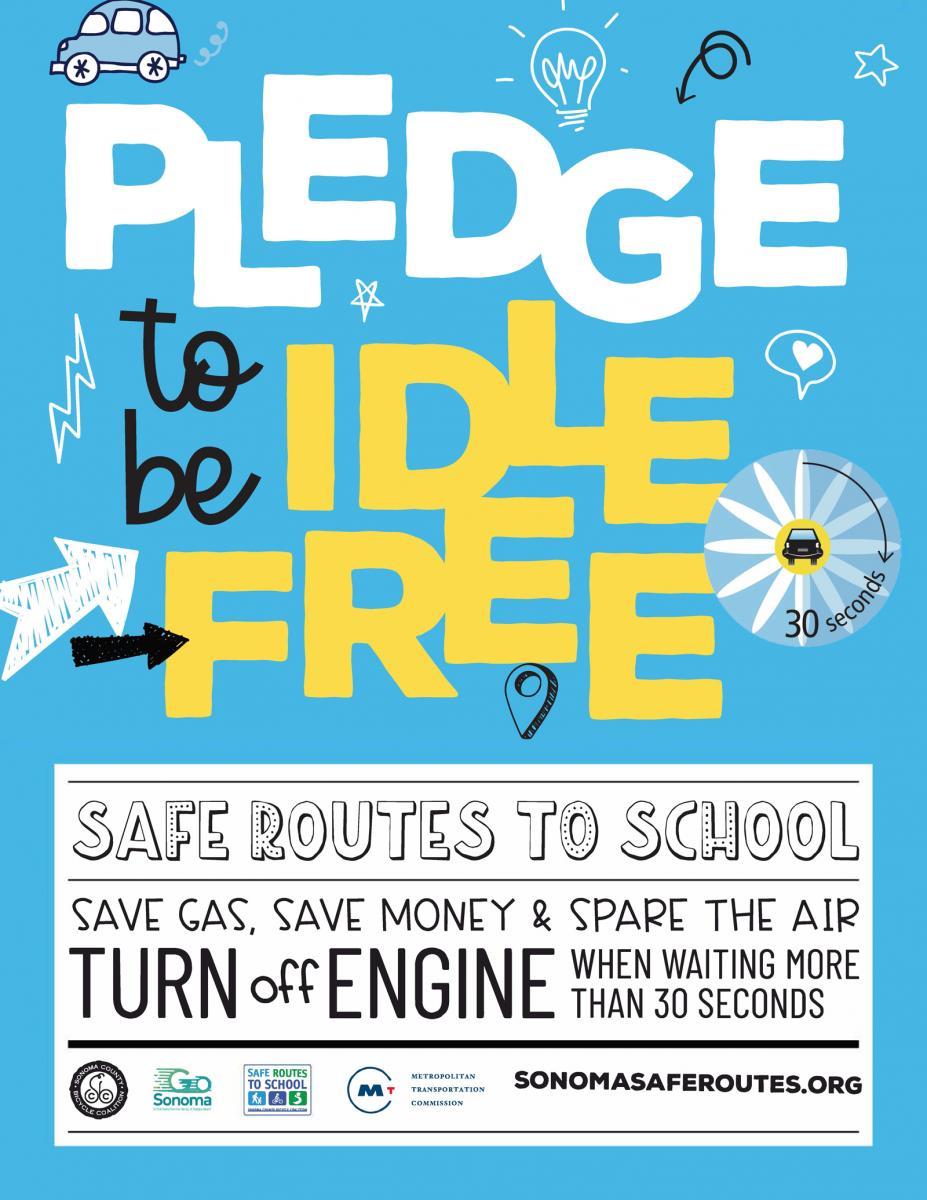
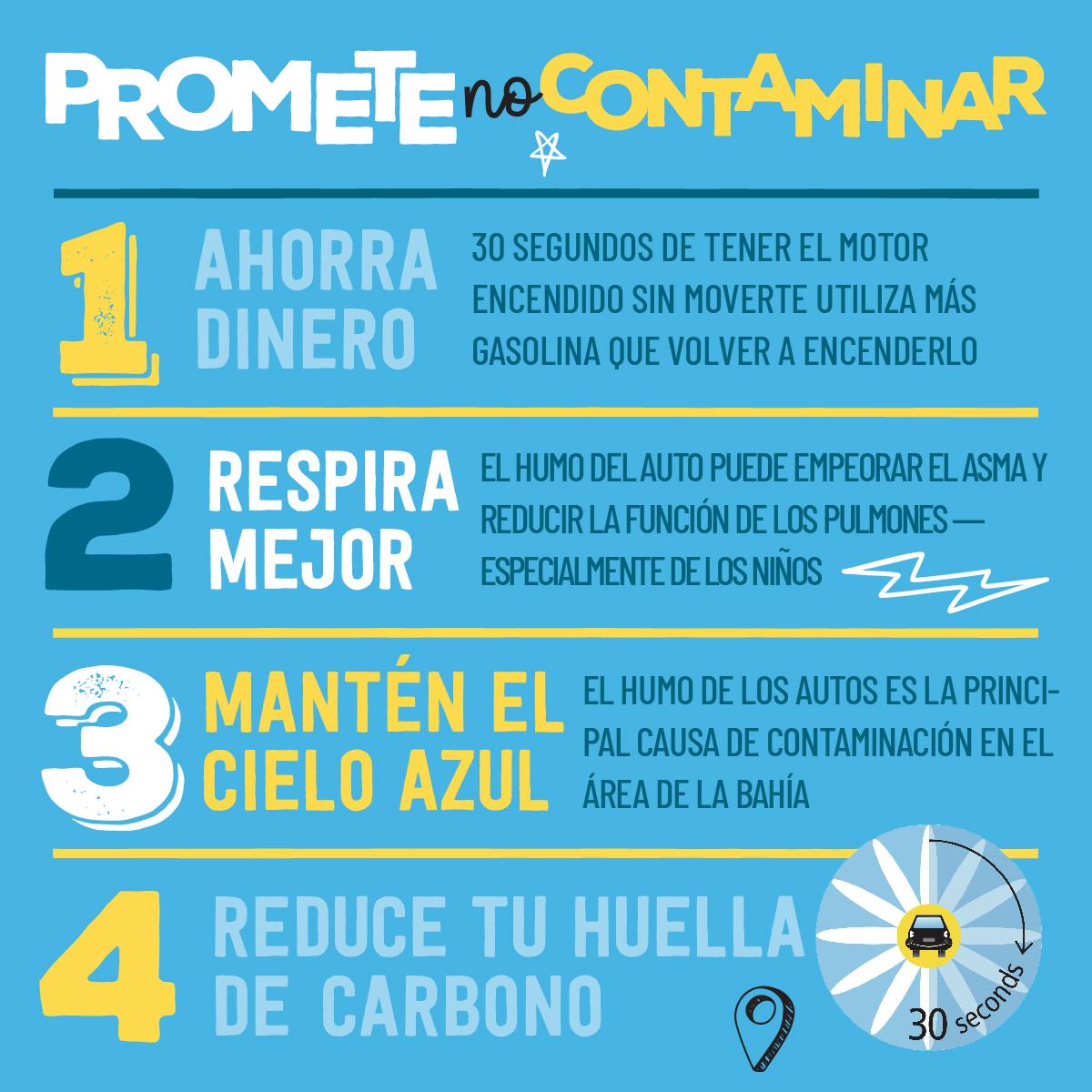
We challenge you to be Idle-Free with Safe Routes to Schools! That means, turn off your car engine when waiting more than 30-seconds. Idle Free Promotional Materials may be utilized by any school at any time of year.
HOW TO PROMOTE AN IDLE-FREE MONTH:
Get educated about the benefits of turning off your engine when waiting more than 30-seconds!
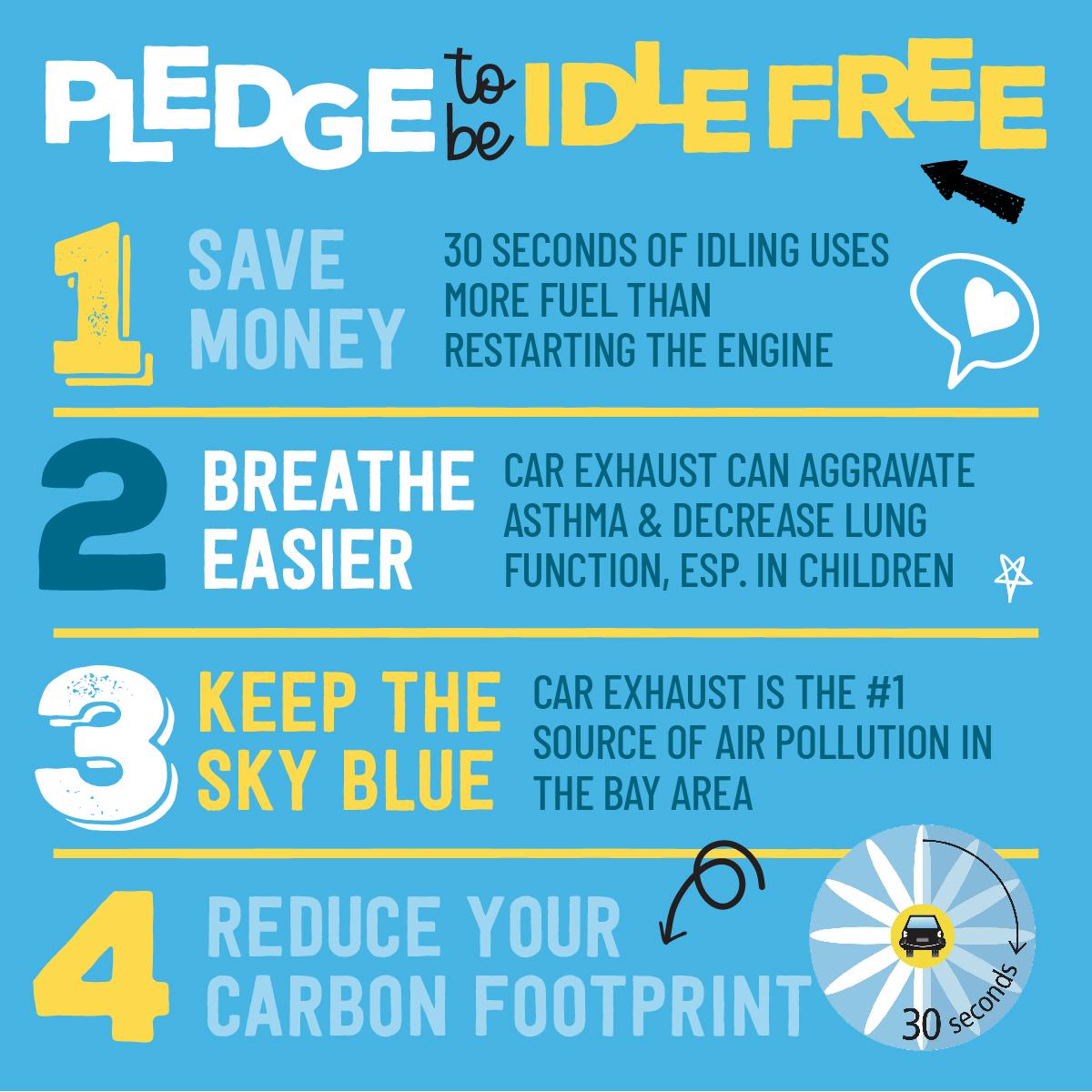
Read this Facts About Idling Fact Sheet in English or Spanish and/or read/share a shorter Instagram-size Fact Sheet in English or Spanish!
Consider creating an Idle Free Pledge that parents can sign, using Google Forms, with an incentive for them to fill out the pledge. See sample Idle-Free Bay Sonoma County Pledge (English) or Spanish (Note: Please do not share the links to these sample pledges, they are no longer being monitored)